

Mousse Mix for Dessert Cups: Easy Menu Ideas for Catering & Cafés
Small cups can make a memorable dessert menu.
A chocolate mousse, a white chocolate base and thoughtfully chosen layers can create a coordinated range for cafe cabinets and catered events.
Explore mousse mix for dessert cups through four menu concepts, preparation, portion planning and service. Start with the Fun Foods Direct Mousse Mix collection .
Begin with Milk Chocolate or White Chocolate Mousse Mix, prepare it according to the current directions, then portion into clear food-safe cups. Add a suitable crumb, fruit or sauce layer and a small garnish. Refrigerate for at least one hour as directed, maintain safe chilled storage and test how the completed cup looks and eats before adding it to your menu.
Choose a mousse base that gives every cup its own identity
The collection currently offers two complementary flavours. Milk chocolate brings a richer cocoa-led profile, while white chocolate offers lighter colour and delicate vanilla notes. Both are powdered mixes intended to be whisked with chilled water, chilled and used in desserts such as mousse glasses, trifles and layered cups.
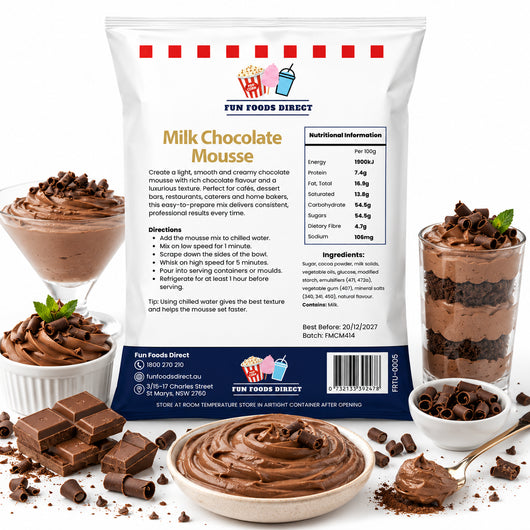
Milk Chocolate Mousse Mix
Rich, fluffy mousse for chocolate cups, brownie layers and dessert glasses. Available in 500g and 5kg options.
Shop milk chocolate mousse →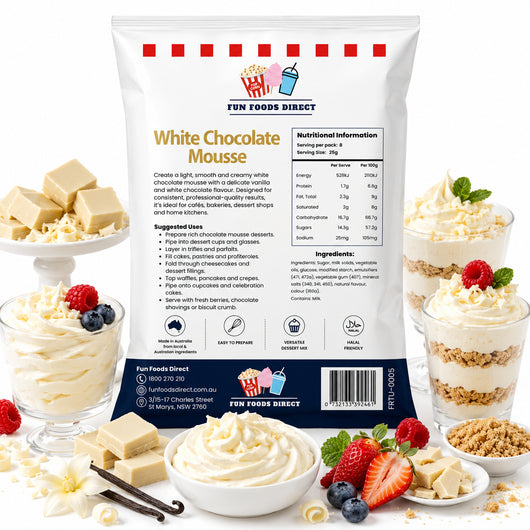
White Chocolate Mousse Mix
White chocolate and vanilla notes for berry cups, biscuit layers and elegant mini desserts. Available in 500g and 5kg options.
Shop white chocolate mousse →Using one mousse base across several ideas can simplify preparation and seasonal changes. Taste the entire finished cup before choosing flavours.
The four-layer method for attractive mousse dessert cups
Transparent cups show the crumb base, mousse, fruit and garnish. Keep each layer neat and easy to spoon; visual impact should never make the dessert awkward to eat.
- 01 / Base: Add a measured amount of biscuit crumb or suitable cake pieces to create texture.
- 02 / Centre: Pipe chilled prepared mousse with a consistent nozzle and fill level.
- 03 / Contrast: Use well-drained berries, a modest sauce ripple or a separate mousse colour.
- 04 / Finish: Add curls, a fruit piece or crunchy decoration that suits safe storage and service.
Keep crunch where it belongs
Moist mousse and fruit can gradually soften biscuit crumbs. Trial your intended holding period before pre-layering everything. For a cup that must remain crisp, consider adding a suitable crunchy topping closer to hand-off, using a clean utensil and clearly managed allergens.
Four easy mousse cup menu ideas for cafes and caterers
These are menu concepts, not manufacturer-tested complete recipes. Establish portion standards and taste each combination. Make the four finishes recognisably different.

Chocolate Brownie Cloud
Layer cooled brownie pieces with prepared Milk Chocolate Mousse Mix, then finish with a light scatter of chocolate curls. Keep brownie portions consistent and avoid hiding the mousse beneath excessive crumb. Serve in a clear cup so the layers sell the idea before the first spoonful.
Menu positioning: a richer, indulgent cafe dessert.
White Chocolate Berry Ripple
Pipe White Chocolate Mousse Mix over a small biscuit base, add a measured amount of well-drained strawberries or berries and finish with a bright berry garnish. The pale mousse creates visual contrast with the fruit. Trial the sauce quantity so the finished cup stays attractive without becoming watery.
Menu positioning: light-looking, colourful dessert option.
Cookies & Cream Duo
Alternate short layers of white and milk chocolate mousse with crushed chocolate biscuits. A little Loaded Cookies n Cream Crunch can be trialled as a finishing texture. Add crunch near service where necessary, and remember that biscuit ingredients change the finished allergen profile.
Menu positioning: a two-tone dessert for display cabinets.
Caramel Biscuit Mini
For a catered dessert selection, pipe smaller, equal portions of white chocolate mousse into matching mini cups. Add a modest biscuit accent and trial Loaded Caramelised Biscuit Crunch at finishing. A compact garnish and readable flavour label help guests browse quickly without needing staff to explain each cup.
Menu positioning: mini servings for catered events.
The store also lists a Strawberry Milkshake Syrup & Dessert Topping for a berry-cup trial. Fruit, biscuits and toppings are additional ingredients, not included with mousse mix.
Prepare mousse mix consistently, then plan your dessert-cup yield
Both current Fun Foods Direct mousse product pages specify the same standard preparation: 500g powder with 750mL chilled water. The listed method calls for one minute of low-speed mixing, scraping the bowl, five minutes at high speed and at least one hour of refrigeration before serving. Make batches within your equipment's safe capacity.
The mousse preparation strip
Use the current product label if instructions change.
Measure
Combine 500g of mousse mix with 750mL of chilled water.
Whisk low
Mix for one minute at low speed and scrape down the bowl.
Whip
Mix at high speed for five minutes to develop a light texture.
Chill
Portion into cups and refrigerate for at least one hour.
Each 500g pack is listed as producing approximately 1.25kg of prepared mousse, with roughly 10–12 standard portions depending on size. Smaller mini cups use a different portion target. The table below illustrates how measured mousse weight changes theoretical output, before piping residue, rejected cups or topping weight.
| Mousse in each cup | Theoretical cups from 1.25kg | Suggested menu role |
|---|---|---|
| 80g | 15 complete cups | Layered cup with separate toppings |
| 100g | 12 complete cups | Classic individual dessert cup |
| 125g | 10 complete cups | More mousse-forward serve |
During a trial, weigh mousse separately from toppings. Divide saleable mousse weight by target portion and round down. Actual waste and demand change purchasing needs; table values are not guaranteed yields.
Keep mousse dessert cups practical for catering and cafe service
Chilled storage matters as much as the recipe. Protect mousse texture and food safety; the one-hour refrigeration step does not specify its shelf life or safe room-temperature holding time.
For a cafe cabinet
- Use matching food-safe clear cups and a consistent fill mark.
- Label each flavour, ingredients and relevant allergens.
- Keep prepared desserts refrigerated in line with food-safety controls.
- Watch moisture changes in crumbs and fruit during display.
For catering trays
- Confirm headcount, mini-cup size and expected collection time.
- Use suitable lids or protected transport arrangements.
- Keep chilled items under appropriate temperature control.
- Transport and finish delicate garnishes without crushing them.
Allergen and storage check
Both listed mousse mixes contain milk. Added biscuits, sauces and crunch products may introduce other allergens. Check current labels, manage cross-contact and use a documented refrigerated storage and transport process. Do not advertise the standard mixes as dairy-free or vegan.
To price each cup, include the measured mousse, crumb, fruit, toppings, container, spoon, staff time and any rejected serves. Start with a small menu, record which combinations sell and expand only when the extra preparation is worthwhile.
Mousse mix dessert-cup FAQs
How much water do I add to 500g of mousse mix?
The current Milk Chocolate and White Chocolate Mousse Mix instructions both specify 750mL chilled water for 500g powder. Mix as directed and check your actual pack's label for any future changes.
How long does prepared mousse need to chill?
The product instructions say to refrigerate for at least one hour before serving. Continue to store prepared mousse under appropriate refrigeration and food-safety controls; the preparation rest is not a complete shelf-life statement.
How many mousse cups does one pack make?
A 500g pack produces approximately 1.25kg prepared mousse, described by the store as about 10–12 standard servings. Smaller cups may produce more portions, while added layers and losses change your real final count.
Can I layer white and milk chocolate mousse in one cup?
Yes. Prepare each flavour separately according to its instructions, then trial neat layers in suitable dessert cups. Compare the appearance and texture after chilling before adding the combination to your menu.
Are these mousse mixes dairy-free?
No. Both current products list milk as an allergen. Check the full labels of the mousse, biscuits, crunch and other additions before communicating dietary suitability.
Which mousse mix should a caterer choose?
Start with the flavour most suitable for the event and choose 500g packs for smaller trials or the 5kg option for larger-volume preparation where appropriate. Measure portion size, available chilling space and food-safe transport capacity before ordering.
Build a dessert-cup range worth displaying.
Start with genuine Fun Foods Direct milk chocolate and white chocolate mousse mixes, use clear portions and turn a few reliable ingredients into a cohesive cafe or catering dessert menu.
Explore Mousse Mixes & Pack Sizes →