

Donut Glaze Guide: Creating a Better Display with Colour, Drizzle & Toppings
Your display should sell the donut before the first bite.
Customers make quick visual decisions at the bakery counter. Gloss catches the light, contrasting glazes separate flavours, and neat toppings give each donut its own identity.
This donut glaze guide shows cafes, bakeries, food trucks and dessert shops how to design a more attractive display using colour, drizzle, toppings and a simple finishing workflow. It draws on real products from the Fun Foods Direct Icing & Glazes collection .
Start with two recognisable glaze finishes - light and chocolate - then give each donut one clear accent. Dip for a smooth base, add a controlled drizzle for contrast, and apply suitable toppings while the coating is tacky. Arrange the display in easy-to-read groups so customers can identify each choice without decoding a crowded tray.
Plan donut glaze colours that look cohesive, not crowded
Begin with the glaze you actually have, rather than trying to create every colour in a photograph. Fun Foods Direct lists a White Donut Glaze and a separate Chocolate Donut Glaze. These offer a useful light-versus-rich contrast for the core range.
Bring in colour with rainbow sprinkles, freeze-dried berries or other suitable food-grade decorations. A pink accent in the supplied artwork is inspiration, not evidence that the collection includes a pink premixed donut glaze. Test any proposed colour changes separately, with food-safe ingredients and label checks.
Vanilla Light
White glaze with a restrained sprinkle accent for a bright, classic bakery look.
Cocoa Rich
Chocolate glaze, with optional crumbs or nuts for extra contrast and texture.
Accent Colour
A light base with a deliberate bright topping detail - not a separate glaze product.
A simple display rule
Limit the case to one familiar light finish, one chocolate option and one rotating accent at first. Repeating those looks across ring donuts, mini donuts or filled varieties makes the display feel abundant without requiring a complicated glaze inventory.
Three donut drizzle techniques for a more polished finish
Drizzle adds direction and contrast, but heavy coverage can hide the base glaze and create messy packaging. Test a dispensing tool, movement and repeatable amount. Stir and handle the glaze according to product instructions.

The Classic Dip
Dip the donut to form a smooth base. Lift it carefully, let excess glaze drain and allow the surface to settle before adding decoration.
The Fine Zigzag
Move a suitable drizzle tool evenly across the top. A small number of clean lines looks more deliberate than covering every visible space.
The Half-and-Half
Use one glaze as the dominant finish and a small contrasting accent. Trial adhesion and setting before offering it as a permanent menu item.
Fun Foods Direct says its donut glazes can be stirred, dipped or drizzled, with excess allowed to drain before the glaze sets. If slight warming is needed for the product's consistency, follow its instructions instead of choosing an arbitrary heating temperature. Use a clean rack below the work area so excess coating does not collect on the presentation tray.
Choose donut toppings that add contrast without hiding the glaze
A topping should create a reason to choose that donut, not disguise the flavour beneath it. Fine rainbow sprinkles provide bright colour; biscuit crumbs contribute a darker, speckled texture; suitable coconut or freeze-dried fruit can create a different visual direction. Nuts offer crunch but demand careful allergen management.
Add suitable decorations while the glaze is still tacky so they have an opportunity to adhere before setting. Apply them over a clean tray to minimise scatter and keep the finished coating off dirty work surfaces. For filled donuts, consider a small topping marker that helps customers distinguish varieties, supported by a readable written label.
Try the one-hero-topping principle
Choose one dominant texture per donut, then use a small complementary accent only when needed. For example, a white-glazed ring with rainbow sprinkles, a chocolate-glazed ring with cookie crumbs, and a plain glossy classic give shoppers three genuinely different-looking options without overwhelming the shelf.
Always confirm the complete recipe's ingredients and allergens before advertising dairy-free, nut-free or gluten-free claims. Decorations can add milk, soy, wheat or nuts, and shared dispensing equipment can introduce cross-contact. Label the finished donut, not just the glaze container.
Shop the actual Fun Foods Direct icing and glaze range
The collection includes four relevant products, each with a different role. The first two are the main donut glaze options. The buttercream is a piping and frosting option; the chocolate RTU dip is primarily designed to form a crisp shell on frozen desserts, so do not confuse it with the room-temperature donut glaze.
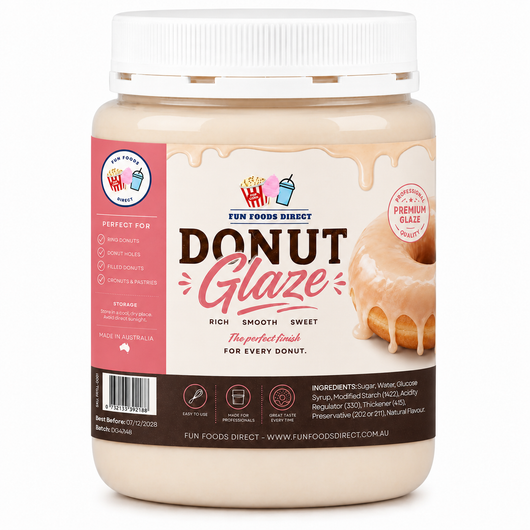
White Donut Glaze
Ready-to-use sweet, glossy coating for dipping and drizzling donuts and pastries.
View white glaze →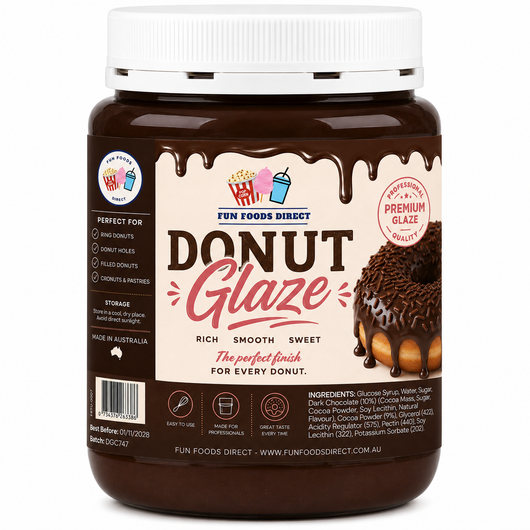
Chocolate Donut Glaze
A separate ready-to-use chocolate-flavoured glaze for bakery-style donuts.
View chocolate glaze →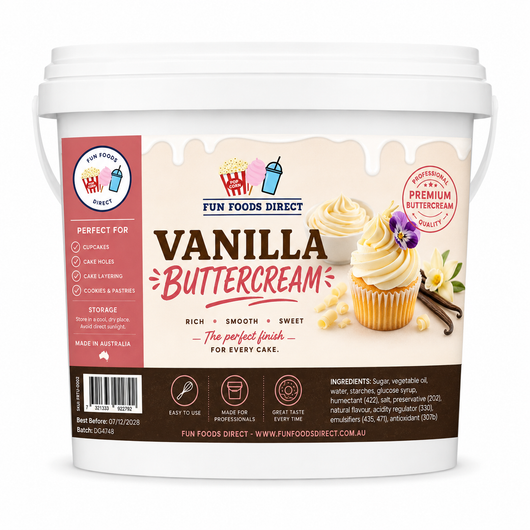
Vanilla Buttercream
Ready-to-use creamy frosting for piped finishes, fillings and related bakery items.
View buttercream →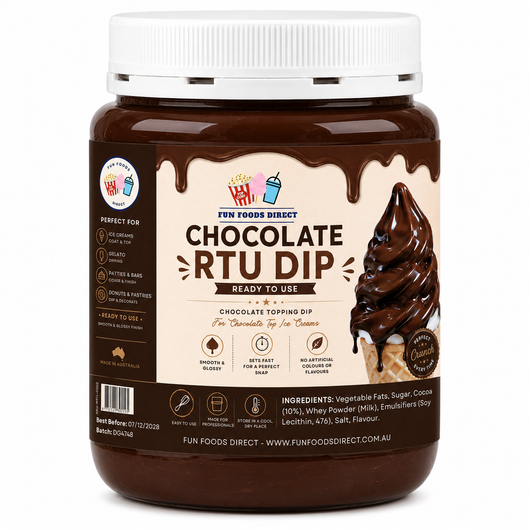
Chocolate RTU Dip
Crisp-shell coating for frozen treats. Not the same product as Chocolate Donut Glaze.
View frozen-dessert dip →| Finish | Primary job | Display application |
|---|---|---|
| Donut glazes | Glossy coating on baked goods | Classic light or chocolate donuts |
| Vanilla buttercream | Spreading, piping and filling | Decorated cakes, cupcakes or suitable filled bakery treats |
| Chocolate RTU dip | Quick-setting shell on frozen desserts | Frozen dessert section, not a direct donut-glaze substitute |
Check the current product page for available sizes, ingredients, storage directions and pricing. The pack images here come from the store's own product listings; they are not invented packaging or generic substitutes.
Arrange your donut display like a considered bakery window
Group products by the appearance customers recognise first. Put the simplest glazed donuts alongside a contrasting chocolate group, then use a small accent area for decorated specials. A consistent arrangement makes browsing easier and helps staff replace a sold-out item without rebuilding the whole display.
A three-zone display plan
Conceptual merchandising layout; adjust to the actual cabinet and its food-safety requirements.
Place classic white-glazed donuts where customers can recognise them instantly. Keep the tray neat and replenish with properly finished stock.
Group chocolate-glazed donuts together so the rich finish reads as a deliberate flavour choice rather than scattered dark patches.
Use one limited-time topping or drizzle treatment for discovery. Keep names, prices and allergens visible without covering the donuts.
Photograph the display under cabinet lighting. Check for glare, dull colours, crumbs and unreadable tickets. Rotate replenishment according to safe holding and quality procedures; a beautiful display is not a reason to leave perishable products outside required temperature controls.
Before the cabinet opens
- Finish donuts on clean racks and allow appropriate setting.
- Group flavours by clear visual differences.
- Check tickets, prices and allergen information.
During the selling rush
- Use one reference photo to guide replenishment.
- Keep glaze containers and decorating tools hygienic.
- Log rejected finishes and which specials sell.
For a trial menu of 24 donuts, you might plan 12 classic, eight chocolate and four featured specials. That is a hypothetical display assortment, not a product yield. Review actual sales and adjust production rather than committing to those proportions every day.
Donut glaze, drizzle and topping FAQs
How do you get a smooth, glossy donut glaze?
Use the glaze according to its label, stir thoroughly, apply an even coating and allow excess to drain. Let it set before packaging. Test the result on your own donuts and do not add unapproved ingredients casually.
Can I make pink or other coloured donuts with these products?
The listed donut glazes are light and chocolate. You can develop colour through appropriate decorations or test food-safe recipe variations, but a pink donut in an image does not mean a pink glaze product is sold in this collection.
When should sprinkles or crumbs go on a glazed donut?
Apply suitable toppings while the glaze is still tacky enough to hold them. Work over a clean tray, use measured portions and allow the finished coating to set before packing.
Is Chocolate RTU Dip the same as Chocolate Donut Glaze?
No. Chocolate Donut Glaze is a bakery coating for donuts and pastries. Chocolate RTU Dip is intended mainly to form a crisp shell on sufficiently frozen desserts. Follow the specific product application instructions.
How many donuts will a glaze container cover?
Coverage varies by donut size and coating thickness. Measure a test batch and base purchasing on saleable yield.
Make the donut counter impossible to overlook.
Start with a clean light-versus-chocolate glaze range, use drizzle and toppings intentionally, and develop a repeatable visual standard for every tray. Explore the real Fun Foods Direct glaze and icing products for your next bakery display.
Shop Donut Glaze & Icing →