
How to Use Chicken Salt Beyond Hot Chips: 9 Practical Ideas
One familiar Australian-style seasoning, nine ways to make more of your savoury menu. Think popcorn, roasted vegetables, chicken, corn, breakfast rolls and quick dips.
For home kitchens, cafés, takeaway shops, food trucks and catering menus.
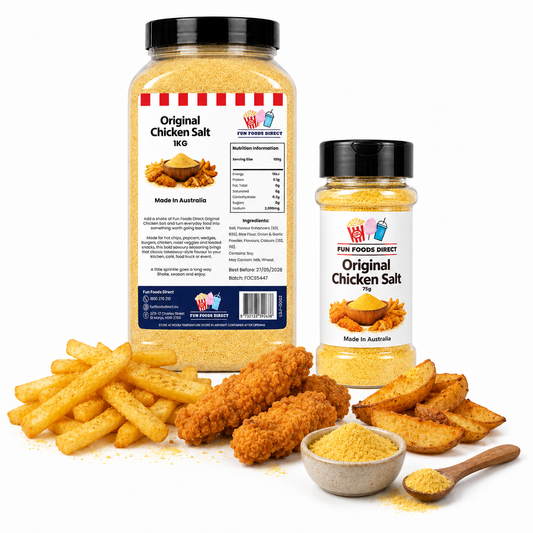

Chicken salt belongs on more than potatoes
Chicken salt is best known on Australian hot chips, but its savoury, seasoned-salt character works on other foods, too. Test it as a light finishing touch on recipes already in your kitchen.
Fun Foods Direct Original Chicken Salt is sold in 75g and 1kg options. The store also offers Lemon Chicken Salt and Vinegar Chicken Salt, each with its own flavour direction. These make it possible to test a classic, citrus-style or tangy finish without treating every dish the same.
The trick is restraint: cook safely, season in stages, toss, then taste. These serving ideas are not manufacturer-approved dosages. Test your own portions before adding them to a menu.
Start with easy crowd-pleasing snacks
Small changes to foods you're already preparing. No complicated equipment required.
Movie-night chicken salt popcorn
Pop plain popcorn and transfer it to a large bowl while still warm. Add a tiny amount of melted butter or a suitable neutral oil if the surface is too dry for powder to stick. Sprinkle on a little Original Chicken Salt, shake the bowl gently and taste before adding more.
For cafés: Trial a savoury popcorn cup. Season individual batches, not the bottom of the serving cup.
Roasted cauliflower, carrots or broccoli
Cut vegetables into evenly sized pieces, toss with a little cooking oil and roast until tender and caramelised. Move to a clean bowl and season while warm. The savoury finish complements sweetness from roasted carrots and the nutty edges of cauliflower.
Serve with plain yoghurt or a suitable dressing. Taste before adding extra table salt.
Cooked chicken tenders or schnitzel
Prepare chicken tenders, schnitzel or grilled chicken using your kitchen's usual safe cooking procedure. Once fully cooked, add a light finishing sprinkle before serving. For a different note, try Lemon Chicken Salt on a small test piece alongside slaw or salad.
In wraps or snack boxes, keep the seasoning light so it does not compete with dressing or marinade.
Tip for menu testing: Write down which flavour you used, where you added it and whether the food needed oil or moisture for adhesion. This makes it much easier to repeat a successful batch.
Three chicken salts, three flavour directions
These are genuine products from the Fun Foods Direct Seasoning Shakers collection. Select the actual pack size on each product page.
Original Chicken Salt
A savoury finishing shake for popcorn, roasted vegetables and cooked chicken.
View Original Chicken Salt →
Lemon Chicken Salt
Chicken salt-style savouriness with a lemon note to test on vegetables, poultry or seafood.
View Lemon Chicken Salt →
Vinegar Chicken Salt
A tangy variation worth testing on roasted chickpeas, popcorn and cooked potato sides.
View Vinegar Chicken Salt →Use it beyond the snack counter
These ideas fit lunch specials, family dinners and small-batch catering menus.
Charred or steamed sweetcorn
Cook corn cobs until tender and ready to eat. Brush lightly with butter or a suitable oil, then add a delicate sprinkle of chicken salt and turn the cob so the flavour spreads. Serve with fresh lime or chopped herbs if they suit your menu.
For stalls, offer the sprinkle as an optional finish.
Crispy roasted chickpeas
Drain and dry cooked canned chickpeas thoroughly, toss with a little oil, then roast or air-fry until crisp enough for your preferred texture. Season gently in a bowl while warm. Original Chicken Salt gives a savoury finish; the Vinegar Chicken Salt variant offers a tangier test batch.
Serve promptly for crunch. Avoid packing warm, steamy chickpeas into sealed containers, which can soften the texture.
Grilled fish or prawn rice bowls
Cook fish or prawns safely and build a bowl with rice, fresh vegetables and your usual sauce. Add a very light shake of Lemon Chicken Salt to the cooked seafood as a finishing note, tasting before deciding whether more acidity or salt is needed.
Reduce or skip the sprinkle if the bowl already includes a salty dressing or crumb.
Three more ways to finish a menu item
Useful when you want a fresh twist without changing your entire kitchen workflow.
Toasties and paninis
Try a small sprinkle of chicken salt on the cooked outside of a cheese-and-tomato toastie, or lightly on roasted vegetables before they go into a panini. It can give a familiar toasted sandwich a different savoury finish. Choose ingredients that already work together, and watch for salt from the cheese, ham or other fillings.
Service idea: Offer an optional “seasoned finish” on an existing toastie rather than inventing a new sandwich with multiple extra ingredients.
Egg-and-avocado breakfast rolls
Cook eggs thoroughly to the intended dish specification, place them in a fresh roll with avocado and leaves, then try a very light dusting of Original Chicken Salt on the egg. The key is balance: avocado is mild, but bacon, cheese and some sauces may already add plenty of salt.
Service idea: Trial one breakfast roll side by side with your ordinary seasoned version and ask staff to compare flavour and assembly time before making it a menu option.
Quick yoghurt dip or sandwich spread
Stir a tiny pinch of chicken salt through plain thick yoghurt or a suitable mayonnaise-based dressing. Add chopped chives, herbs or a little lemon juice if desired, then taste before adding anything else salty. Pair it with cooked vegetables, chicken tenders or a wrap.
Food-safety check: Make the dip with clean utensils, refrigerate promptly as appropriate for its ingredients, label preparation times and follow your food business's chilled-food procedures.
When should you add chicken salt?
There's no one-size-fits-all dose. The most useful decision is often the stage at which you add the seasoning.
| Food type | When to season | What to check |
|---|---|---|
| Popcorn, roasted chickpeas | After cooking, in a roomy tossing bowl | Dry snacks may need a small amount of suitable oil for adhesion. |
| Roasted vegetables, cooked corn | While warm, close to service | Taste first if butter, sauces or the recipe already contain salt. |
| Cooked chicken or seafood | Only after safe cooking, when using a finishing method | Keep clean, ready-to-eat equipment separate from raw-food preparation. |
| Yoghurt dip or sandwich spread | Stir through gradually before service | Follow correct refrigeration, hygiene and allergen procedures. |
These are suggested application methods, not specific manufacturer preparation directions. Always follow the current pack label and the relevant food preparation instructions.
Turn an idea into a repeatable menu item
A good seasoning recipe should be repeatable. Trial one cooked batch, weigh the seasoning added and record the result. Repeat before adopting it as a staff recipe.
For example, suppose a six-serve popcorn test tastes right after you use 3g total seasoning. That works out to 0.5g per portion for that tested recipe. It is not a manufacturer-recommended serving amount and should not be assumed to suit chicken, vegetables or other foods.
Compare the 75g shaker with a 1kg pack using actual usage, wastage, price and storage space. Theoretical yield is not guaranteed portions.
Three checks before you put it on the menu
1. Check the real pack label
The name “chicken salt” does not confirm whether a particular formulation contains chicken, gluten, milk or other ingredients. Check the current ingredient statement and allergen declaration before making dietary claims or answering allergy questions.
2. Store seasoning dry
Keep the shaker or bulk pack closed in a cool, dry place away from moisture and direct sunlight. Use clean, dry utensils; don't shake directly over steaming food or allow raw-meat equipment to touch ready-to-eat seasoning.
3. Keep finished food safe
Seasoning does not make food safe. Potentially hazardous foods generally need control at 5°C or below or 60°C or above; follow FSANZ guidance.
Safety references: FSANZ — Processing food safely, Keeping food at the right temperature and Food allergies.
Want a different seasoning direction?
These two products are other seasoning flavours, not chicken salt variants. They can support a wider popcorn, toastie or snack menu when their ingredients and flavour fit your recipe.
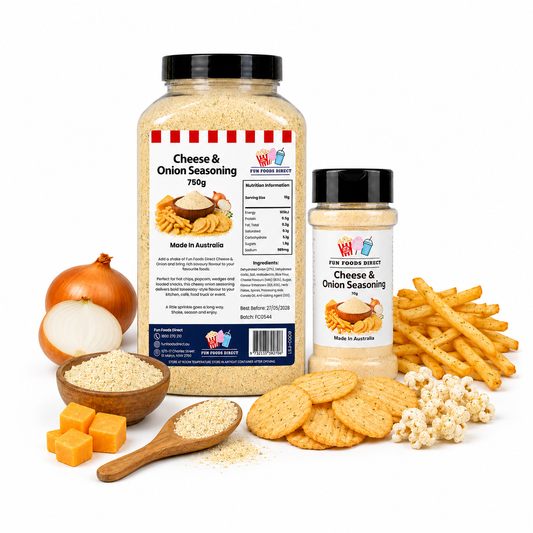
Cheese & Onion Seasoning
Try this different savoury flavour on popcorn or cooked snack sides. Listed sizes: 70g / 750g.
See the product →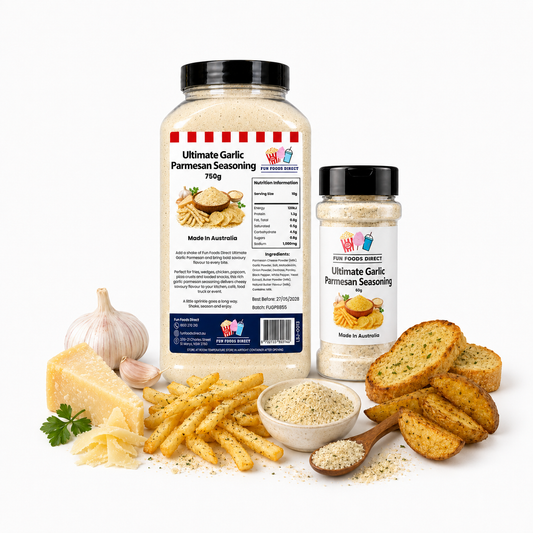
Ultimate Garlic Parmesan Seasoning
A separate garlic-and-parmesan-style choice for toasted sandwiches or savoury sides. Listed sizes: 75g / 750g.
See the product →Frequently asked questions
Practical answers for home cooks and commercial kitchens testing new chicken salt uses.
Can chicken salt be used on foods other than chips?
Yes. Try a light finishing sprinkle on freshly popped popcorn, roasted vegetables, cooked chicken, corn, chickpeas, breakfast rolls or a savoury dip. Start with a little and taste because other ingredients may already contain salt.
Should I add chicken salt before or after cooking?
For the finishing ideas in this guide, add it after safe cooking, usually while the food is still warm. If using a seasoning before cooking as part of a different recipe, follow that recipe and its food-safety requirements rather than assuming the finishing method applies.
How much chicken salt should I use per serving?
There is no verified universal dose. Trial a small batch, season gradually, weigh your preferred amount and record it. The 0.5g example is illustrative only.
What is the difference between Original, Lemon and Vinegar Chicken Salt?
Original is the classic savoury blend; Lemon has a bright lemon note; Vinegar offers a tangy finish. Trial each on a small portion.
Is chicken salt gluten free or vegetarian?
Not automatically. Formulations vary. Read the current physical pack and confirm any gluten-free, vegetarian or allergen claim with the supplier.
How should I store chicken salt in a café?
Keep it sealed and dry, away from moisture and heat. Use clean utensils, separate it from raw-food areas and follow the pack’s storage and best-before instructions.
Which pack size should I buy?
Fun Foods Direct currently lists 75g and 1kg sizes for Original, Lemon and Vinegar Chicken Salt. A smaller shaker is convenient for testing and occasional use; compare a larger pack against your actual recipe usage and storage capacity when cooking more regularly.
Product information: Pack sizes, product images and flavour descriptions reflect the Fun Foods Direct online listings checked during drafting (October 2026). Recipes and calculations are editorial examples, not manufacturer-issued instructions. Ingredient declarations, allergen status, prices and availability must be checked against the current product label and listing before publication or service.