

Potato Flakes for Commercial Kitchens: Speed, Storage & Portion Control
Less time on peeling. More control at the pass.
When lunch orders arrive together, mashed potato can become a bottleneck. Fresh potatoes need washing, peeling, boiling and mashing; an instant potato-flake base removes several of those jobs. The bigger advantage is a repeatable station: measure, rehydrate and portion consistently.
This guide turns potato flakes for commercial kitchens into a practical system for pubs, cafés, caterers and takeaway operators using the Fun Foods Direct Potato Flakes collection .
Keep unopened potato flakes cool, dry and sealed; measure the correct water ratio for your specific pack; and use a weighed serving standard after preparation. The 500g product page lists 1 part flakes to 4 parts hot water, while the 10kg listing gives 1 part flakes to 5 parts water. The online instructions differ, so verify the current label before producing a large batch.
Where instant potato flakes save prep time in a busy kitchen
Instant flakes are dehydrated potato pieces designed to rehydrate with hot water. They remove fresh-potato peeling and boiling from the service workflow, which can be valuable when the same team also handles grills, sauces and plating. The work still includes heating water, mixing, cleaning and serving.
Measure
Weigh the dry flakes and hot water using the directions for the purchased pack.
Rehydrate
Stir, let the flakes hydrate as instructed and fluff to the required consistency.
Serve
Check texture and temperature, then dispense the approved portion onto the plate.
Record active preparation time for a measured batch and compare it with your current fresh-potato method. Include washing, peeling, cooking, mashing and cleaning for the scratch version, then compare the number of acceptable portions produced. Speed still needs to meet your quality standard.
Potato flakes mixing ratios: why pack instructions matter
The store lists both a smaller 500g pack and a separate 10kg commercial pack. Their current online preparation information is not identical. Treat these as published figures, not interchangeable recipes.
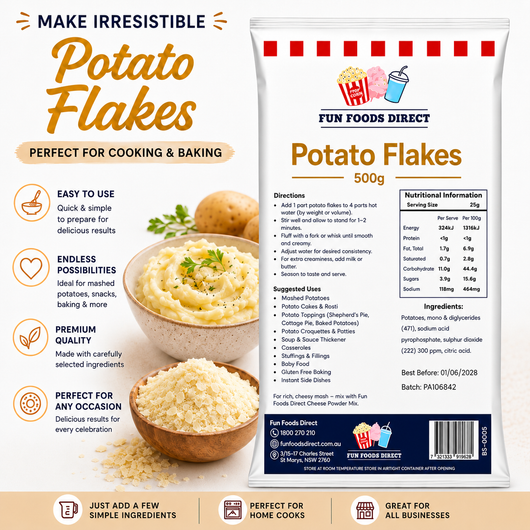
500g Potato Flakes
For controlled tests, occasional mash service and smaller preparation runs.
View 500g flakes →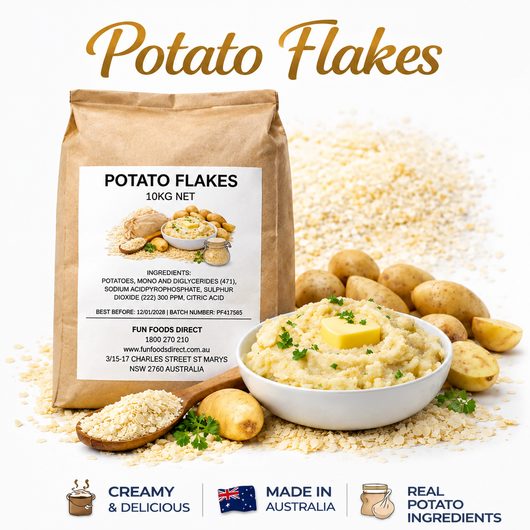
10kg Potato Flakes
For regular foodservice use when demand and suitable dry storage justify a bulk pack.
View 10kg flakes →1 part flakes + 4 parts water
Approximately 2.5kg of mash before optional additions or preparation losses. The listing says to rest for around one to two minutes.
1 part flakes + 5 parts water
The 10kg listing suggests approximately 60kg prepared mash. Confirm the actual pack label and test a smaller batch before scaling.
Do not assume one ratio fits both packs
The 500g page elsewhere uses a different bulk-yield estimate, so the website's cross-pack figures are not fully consistent. Check the label on your purchased pack. Measure using one consistent method, record the final usable weight and adjust seasoning only after a taste test.

Store dry potato flakes correctly - then treat prepared mash differently
Dehydrated flakes are practical pantry inventory because they do not require the same preparation or storage space as fresh potatoes. The 10kg listing instructs operators to keep the product in a cool, dry place away from direct sunlight and reseal it securely once opened. Follow the actual package's date and storage directions; an unopened shelf-life claim is not a safe holding time for prepared food.
Dry stock / before mixing
- Keep bags away from steam, moisture and direct heat.
- Seal opened packs and label opening dates.
- Use clean, dry scoops to prevent contamination.
- Rotate stock using the relevant date markings.
Prepared mash / after water
- Use clean food-contact equipment and safe water.
- Check food temperature with a suitable probe.
- Hot-hold potentially hazardous food at 60°C or hotter unless using a validated alternative.
- Cool leftovers rapidly under applicable food-safety controls.
A food-safety boundary worth teaching
Adding water changes the handling requirements. Food Standards Australia New Zealand advises keeping potentially hazardous food at 5°C or colder, or 60°C or hotter, except under a demonstrably safe alternative system. Follow your food-safety plan for cooling and reheating, and never treat dry-product shelf life as the shelf life of prepared mashed potato. See FSANZ temperature guidance .
Turn one tested batch into consistent mashed potato servings
A repeatable side dish requires a measured reference. Place an empty bowl on a scale, tare it and add the standard scoop of finished, seasoned mash. Repeat several times; agree on a practical target weight and photograph the correct plated appearance. Spot-check during service to prevent portion drift.
The table below uses the 500g listing's approximate 2.5kg prepared yield purely to illustrate complete portions. It does not predict every batch, and it excludes butter, milk, toppings, transfer residue and rejected servings.
A smaller plated accompaniment or portion-controlled side.
A mid-size reference for a standard lunch plate.
A more generous side, to be costed and priced accordingly.
To calculate real cost per serve, divide the full batch's ingredient cost by the number of acceptable completed portions. Include any milk, butter or seasoning added, plus measured waste. A 100g portion and 150g portion should not have the same assumed ingredient cost simply because they use the same scoop shape.
Train with a visual standard and a scale
A scale is useful for calibration, while a photograph helps the team plate quickly. Recheck if the water ratio, add-ins, batch consistency or serving utensil changes. For catering, portion and count what you can safely hold and transport, rather than automatically preparing the entire dry pack.
Potato flakes FAQs for commercial kitchens
How quickly can potato flakes be prepared?
The 500g product instructions specify adding flakes to hot water, stirring, resting approximately one to two minutes and fluffing. Allow additional time for heating water, measuring, seasoning and safe service; actual workflow time depends on your batch size and equipment.
What is the correct potato-flake-to-water ratio?
The store's 500g listing gives 1:4, while its 10kg listing gives approximately 1:5. Do not substitute one set of instructions for the other. Check the current label on the particular pack you use and measure a test batch by a consistent method.
How many 100g portions does a 500g pack make?
At the 500g page's 1:4 ratio by weight, the theoretical prepared yield is 2.5kg, equal to 25 portions of 100g before losses and added ingredients. Weigh your finished mash to establish actual saleable portions.
Are unopened flakes stored in a refrigerator?
The bulk listing specifies cool, dry storage away from direct sunlight rather than general chilled storage. Once the flakes have been rehydrated, appropriate prepared-food temperature and time controls apply. Follow the current label and food-safety plan.
Can potato flakes replace fresh potato in every dish?
No. They are practical for mash, selected pie toppings, croquettes and thickening applications, but the taste, structure and cooking behaviour differ from whole fresh potatoes. Develop and test the recipe before making a permanent substitution.
Should a café choose 500g or 10kg?
Choose based on repeat sales, suitable sealed dry storage and how quickly the stock will be used. A smaller pack suits trials and occasional demand; the 10kg format may fit high-volume service. Check current price, instructions and stock for each actual product.
Make your potato side easier to repeat.
Explore the real Fun Foods Direct potato flakes formats, confirm your purchased pack's preparation directions, and build a controlled prep, storage and portion plan for your kitchen.
Shop Potato Flakes & Compare Pack Sizes →