
7 Ways to Season Hot Chips Without Making Them Soggy
Great hot chips need more than flavour: they need a crisp surface, sensible seasoning and an escape route for steam. Here are seven practical methods that work across takeaway counters, food trucks and home kitchens.
How do you keep seasoned chips crispy?
Drain properly, season lightly while the chips are hot, toss in a dry bowl and serve or pack them so steam does not collect around the chips. Use dry flavoured seasonings where you want tangy, cheesy or herby flavour without a liquid topping.
- 1Keep excess frying oil out of the seasoning bowl.
- 2Use a measured, light coating instead of piling on powder.
- 3Keep vinegar, gravy and dipping sauces separate where possible.
- 4Choose takeaway packaging that lets moisture escape safely.
Why do hot chips go soft after seasoning?
A crisp chip has a comparatively dry outer layer. Extra surface oil, liquid sauces, and steam trapped in a closed container can soften that crust. The seasoning itself is not always the culprit; timing and handling matter just as much.
Dry surface → dry seasoning → ventilation
Drain cooked chips, shake on a modest amount of dry seasoning in a separate bowl, then serve promptly. For takeaway, choose a suitable food-safe, vented container and keep wet accompaniments separate.
Wet chips → heavy topping → sealed steam
Rushing chips from a crowded basket into a deep closed pack, pouring on vinegar and sealing immediately encourages surface moisture and uneven softening. Heavily sauced loaded fries are a different menu style from crispy seasoned chips.
These are food-quality principles, not guarantees of a specific crispness duration. Actual results depend on potato cut, coating, cook method, serving size and travel time.
7 ways to season chips and preserve their texture
Follow these moves in service order. Each one tackles a different source of sogginess — from cooking oil to packaging — and pairs with real product options.
Drain chips before you add seasoning
Take properly cooked chips out of the fryer and allow excess oil to drain in the basket or designated chip-draining station. A gentle shake prevents oil pooling on the surface and in the bottom of the seasoning container. Then transfer the chips to your clean, dry mixing bowl.
Season away from the fryer. McCain Foodservice Australia's frying guidance makes this distinction because seasoning directly above frying oil can affect oil quality. For an air fryer or oven batch, the equivalent check is to make sure the chips are fully cooked and not sitting in a puddle of moisture.
Kitchen check
- Is the batch fully cooked, rather than pale or wet at the centre?
- Is oil still dripping or collecting in the bottom of the basket?
- Is the seasoning station dry and separate from cooking oil?
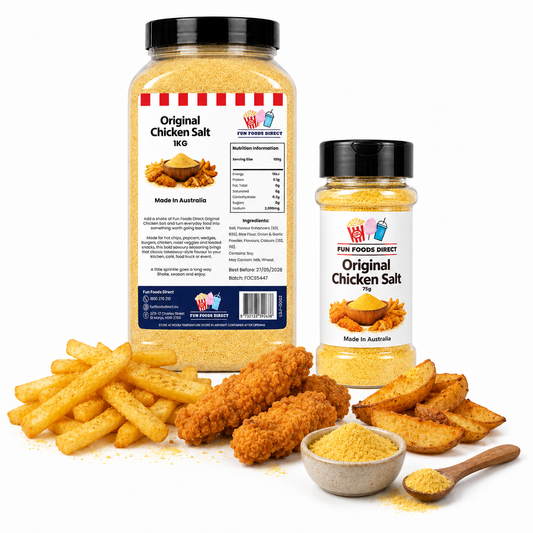
Try with: classic Original Chicken Salt. A light finish after draining lets the savoury flavour reach the chips without creating an oily paste.
Let visible steam escape before closing or stacking
Freshly cooked chips continue to release water vapour. If you drop a large portion into a deep, closed container straight away, the steam can condense on the chips and inner packaging. A brief moment in a well-ventilated draining area allows the most obvious steam to disperse while the chips are still hot enough to pick up seasoning.
That is not an invitation to leave cooked chips sitting for a long time. Crispness, temperature and food safety all benefit from a short, organised hand-off. For immediate dine-in service, toss and plate promptly; for takeaway, keep the package design in mind from the start.
What to avoid
Do not stack several hot portions in a solid, lidded tub while waiting to season them. Avoid putting a lid over an uncovered steaming tray simply to keep the heat in; it trades ventilation for moisture retention.
Apply a light, measured shake — then taste
Too much seasoning can gather in salty patches and hide the potato flavour. Some blended powders contain ingredients that behave differently from fine salt, so there is no single universal grams-per-portion rule for every shaker on the shelf. Start with a small measured amount, toss thoroughly and taste a representative chip before adding more.
For a 150g test portion of cooked chips, compare 0.5g, 0.75g and 1.0g of one chosen seasoning. These are suggested trial amounts for your kitchen, not manufacturer dosing instructions. Choose the amount that tastes balanced and distributes well. Repeat the test when you change seasoning, chip cut or portion size.
Make a repeatable kitchen standard
- Weigh the cooked chips, not the uncooked frozen portion.
- Use a clean, dry measuring spoon or accurate small scale for the trial.
- Record your chosen amount, batch size and flavour on a recipe card.
- Check the product's current sodium and allergen label before finalising a menu.
The key is coverage, not volume. A lighter, evenly distributed coating often tastes more deliberate than a heavy layer sitting on top.
Toss in a wide, dry bowl instead of seasoning the pack
A dry stainless-steel or food-safe mixing bowl gives you room to move the chips without crushing them. Add your first light sprinkle, toss once or twice to turn over the chips, then check the underside before deciding whether another shake is needed. This is more consistent than dumping powder onto the top of a takeaway box.
Do not overfill the bowl: a giant mound makes even distribution difficult and can break the crisp tips. In a busy café or food truck, work in practical small batches rather than continually topping up the same bowl of chips.
A simple two-pass technique
- Place the drained cooked portion into a clean, dry bowl.
- Add most of the measured seasoning, lift and tumble gently.
- Check coverage, add the remaining small portion if needed, then serve.
Choose a dry salt-and-vinegar or citrus-style seasoning
A generous pour of liquid vinegar immediately brings moisture to the chip's surface. If the goal is to preserve crunch, try a dry tangy seasoning instead. Fun Foods Direct lists Salt N Vinegar Seasoning and Lemon Chicken Salt as seasoning options for chips and snack foods. Their flavour profiles can give a bright finish without the same volume of added liquid.
Apply after cooking and draining, when the chips are hot. Distribute the powder in the bowl and serve promptly. This does not make the surface immune to sogginess — steam, too much seasoning and poor packaging can still soften the chips — but it removes one common source of extra liquid.
Which version should you test?
- Salt N Vinegar Seasoning: for a more direct tangy, chip-shop-style direction.
- Lemon Chicken Salt: when you want savoury chicken salt character with a brighter citrus-inspired note.
Menu idea: offer a small dip cup or a vinegar sachet on the side, so diners who enjoy extra acidity can choose when to add it.
Build cheesy, herby or spicy flavours without a wet blanket
Loaded chips can be delicious, but a heavy pour of cheese sauce, gravy or dressing creates a different texture experience. For a crisp-seasoned chip special, keep the base dry and build flavour with powder. The Seasoning Shakers collection offers Loaded Nacho Cheese, Sour Cream & Chives, Ultimate Garlic Parmesan and Peri Peri seasoning options.
For example, finish drained chips with Loaded Nacho Cheese seasoning for a nacho-style flavour, or use Sour Cream & Chives for an herby note while serving actual sour cream separately. This approach also makes it easier to prepare multiple dry flavour choices from the same cooked chip base.
Three practical menu concepts
- Nacho dust chips: a light dry Loaded Nacho Cheese coat, with salsa served separately.
- Garlic-style fries: Ultimate Garlic Parmesan seasoning over hot fries, without mixing in a wet dressing.
- Peri Peri chips: a restrained dry spicy finish after cooking, with a dip available on the side.
Allergen and dietary check: cheese-, cream- or parmesan-style product names do not establish the exact ingredients. Check the current physical label for milk and other allergens; don't assume a product is dairy-free, vegetarian or suitable for a particular diet.
Use vented packaging and keep wet dips on the side
Even perfectly fried, lightly seasoned chips can soften in a sealed container. Steam from the food has nowhere to go, so droplets can form on the inside of the lid and fall back onto the crust. For takeaway and delivery, choose an appropriate food-safe chip carton, sleeve or pack with effective ventilation. Avoid compressing the chips into a tight, wet stack.
McCain's takeaway-packaging guidance supports venting and moisture control, while also reminding operators to protect food temperature during delivery. In practice, this means balancing airflow with heat retention, not leaving boxes wide open for long journeys. For extra-saucy loaded chips, package wet toppings separately where the menu format allows and let customers add them just before eating.
Before the bag leaves the counter
- Are the chips freshly cooked, drained and evenly seasoned?
- Does the food-safe pack release steam without risking spills or contamination?
- Are wet dips, gravy and dressings separated from the crispy chips?
- Is the food being handled and transported according to your food-safety plan?
Find your best seasoning amount with a three-portion trial
Rather than guessing how many shakes to use, run a repeatable tasting test. This works for cafés, takeaway shops, event stalls and home cooks who want a dependable result.
150g chips + 0.5g powder
Light application. Note whether flavour is detectable and whether the coat is even.
150g chips + 0.75g powder
Medium trial. Compare intensity and the salt balance against A.
150g chips + 1.0g powder
Stronger trial. Check whether the flavour overwhelms the potato or collects in patches.
These are trial quantities only, not the manufacturer's recommended dosage. Keep chip type, cook time, temperature at tasting, and mixing method as consistent as possible. Run the test again for each seasoning; varying salt content and particle sizes can affect flavour. Use the current label to check sodium, allergens and any product-specific instructions.
Illustrative seasoning cost per portion
Suppose a hypothetical seasoning pack contains 120g and costs $9.00. If your tested application is 0.8g per portion:
That is approximately 6 cents of seasoning per portion before wastage. It excludes chips, oil, packaging, labour, GST differences and delivery fees.
Batch record to copy
Record: product & batch number; cooked chip weight; seasoning weight; fry/oven method; toss method; packaging type; service time; customer or staff texture notes.
Test both immediate service and your normal takeaway journey. A batch that tastes excellent at the counter may need different packaging for delivery.
Choosing a seasoning by service style
| Service style | Dry approach | Moisture precaution |
|---|---|---|
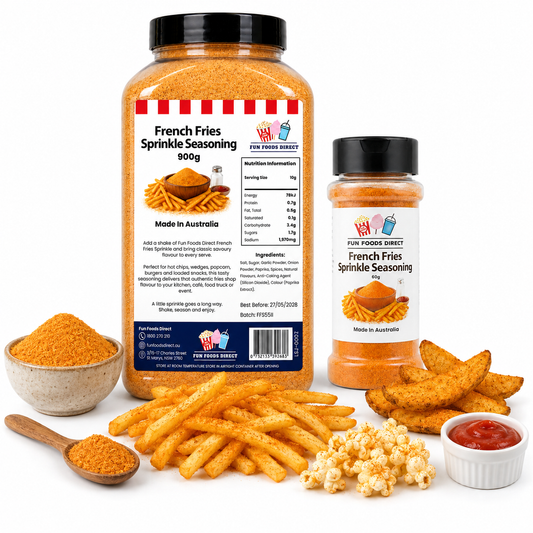
| Classic takeaway chips | Original Chicken Salt or French Fries Sprinkle | Drain, toss, serve in a ventilated pack |
| Salt-and-vinegar fans | Salt N Vinegar dry seasoning | Offer extra liquid vinegar separately |
| Herb-style wedges | Sour Cream & Chives seasoning | Keep actual dips in their own cup |
| Nacho-style chips | Loaded Nacho Cheese seasoning | Serve salsa or melted cheese separately if crispness is the goal |
| Spicy fries | Peri Peri seasoning | Coat lightly in a dry bowl and keep sauce on the side |
On a phone, scroll sideways inside the table to see every column.
If the chips still go soggy, check these clues
Seasoning is only one link in the chain. If the crunch disappears, change one factor at a time so you can see what makes the difference.
| What you notice | What might be happening | Try this next |
|---|---|---|
| Oil pooling at the bottom | Inadequate draining or overloaded frying basket | Review chip cooking instructions, drain well and move to a clean bowl |
| Powder clumping in patches | Excess surface moisture or too much seasoning at once | Dry the bowl, use a measured light amount and toss in two passes |
| Chips soft inside a closed carton | Steam condensing in packaging | Test a vented food-safe pack and avoid overfilling |
| Bottom chips wet, top chips crisp | Wet topping pooling, or a packed-down portion | Separate sauces and avoid compression |
| Flavour too salty but chips are crisp | Over-dosing; seasoning blend may already contain salt | Reduce the weighed portion and check the sodium label |
| Chips soft before seasoning | Cooking or holding issue, not a seasoning issue | Check potato cut and the fryer/oven manufacturer's cooking instructions |
On mobile, swipe horizontally inside the table.
Food safety and allergen reminder
A crunchy finish never replaces safe food handling. Follow your fryer or oven instructions; keep equipment and seasoning utensils clean; and avoid sprinkling directly over steam or contaminated food surfaces. For meals containing potentially hazardous ingredients, follow your food-safety plan and the relevant FSANZ hot-holding, cold-holding and time-control requirements. Do not assume all plain chips have the same risk profile as loaded chips with meat, dairy or gravy.
Check physical product labels before making dairy-free, gluten-free, vegan, halal or allergen claims. Fun Foods Direct specifically advises customers to use the current pack label because ingredients and formulations may change. See Fun Foods Direct ingredient and allergen guidance and FSANZ's temperature-control guidance.
FAQ: crisp, well-seasoned hot chips
The practical details operators and home cooks ask about most often.
When is the best time to season hot chips?
After the chips have finished cooking and excess oil has drained, while they are still hot. Toss in a separate dry bowl rather than sprinkling over the fryer. Serve promptly.
Does chicken salt make chips soggy?
A light coating of dry chicken salt does not automatically make chips soggy. Excess oil, steam, added liquids, overdosing and poor packaging can contribute to softness. Test the specific product and your cooking method.
Can I use dry salt-and-vinegar seasoning instead of liquid vinegar?
Yes. Fun Foods Direct lists Salt N Vinegar Seasoning for chips and snack foods. It is a way to add tang without pouring vinegar directly over the chips. It will not guarantee crispness if the package traps moisture.
How much seasoning should I add to 150g of cooked chips?
There is no universal dose for every seasoning. As a kitchen trial, compare 0.5g, 0.75g and 1.0g on separate 150g portions, then choose the balance you prefer. These are illustrative test quantities, not manufacturer instructions.
How do I season air-fried chips without making them greasy?
Cook the chips fully using the equipment and potato-product directions. Transfer to a clean bowl, add a small amount of dry seasoning and toss. If the surface is so dry that seasoning will not stick, test only a minimal amount of suitable oil where your recipe permits; more oil is not automatically better.
What is the best way to season chips evenly?
Use a wide, clean, dry bowl. Add most of the measured seasoning, lift and toss gently, then assess coverage before adding the remainder. Do not pack the mixing bowl too full.
Can I use cheese or sour cream flavours while keeping chips crisp?
Dry blends such as Loaded Nacho Cheese or Sour Cream & Chives Seasoning can provide those flavour directions without pouring sauce on the chips. If using actual cheese sauce or sour cream, serve it separately when a crisp result is the priority. Check the current physical pack for allergens.
Should I close the takeaway box immediately?
Use food-safe packaging that balances heat retention, food protection and moisture escape. Steam trapped in a completely sealed pack can condense and soften chips. Test a vented option suited to your normal delivery time and food-safety procedures.
Can I season chips before frying?
For the dry finishing blends featured here, the practical approach is to cook, drain, then season the chips. Do not add seasoning directly over hot fryer oil. Only add a product before cooking where its own instructions and your recipe specifically support that application.
Will this method keep chips crispy for a guaranteed number of minutes?
No. Texture depends on the potato variety, cut, coating, cooking method, serving size, humidity, time and packaging. Run a small controlled test for your own takeaway or dine-in workflow rather than promising a universal crispness window.
Make the crunch your signature. Let the seasoning do the talking.
Choose a controlled cooking and seasoning routine, then trial flavours that suit your customers and serving style. Fun Foods Direct stocks classic chicken salt, French fries sprinkle, dry salt-and-vinegar blends, cheesy-style options, herby seasonings and spicy finishes for building a varied chip menu.
Shop all Seasoning Shakers →