7 Common Reasons Slushies Freeze Too Hard or Stay Too Runny
If your slushy has turned into a solid block or refuses to thicken, the solution starts with the recipe, the machine and the order of your checks—not guesswork.
Too icy? Too liquid? Diagnose before you change a thing.
A good slushy contains tiny ice crystals suspended in a mixture that still flows and dispenses. It should not lock the paddle in place, and it should not behave like ordinary chilled cordial.
Both extremes can come from the same overlooked step: incorrect preparation. But freezing problems also involve starting temperature, machine settings, fill level and maintenance. This guide gives home users, cafés, food trucks and event operators a repeatable way to narrow down the cause.
For standard Slush It concentrates, the current store guidance is one part syrup to four parts cold water. The individual label and your equipment instructions take priority if they differ.
Before troubleshooting, confirm what went into the tank.
The easiest error to rule out is the measurement. These figures are verified for the standard Slush It syrup range, not a universal ratio for every brand or sugar-free formulation.
A full 2L concentrate bottle needs 8L of cold drinking water to make 10L of prepared liquid mix before freezing.
Check store mixing guidance →Measure a batch that fits your machine
Swipe across the table to see the total prepared volume →
| Syrup | Cold water | Total prepared mix |
|---|---|---|
| 100mL | 400mL | 500mL |
| 200mL | 800mL | 1L |
| 500mL | 2L | 2.5L |
| 1L | 4L | 5L |
| 2L | 8L | 10L |
Pre-mix in a clean, food-safe container. Use your machine's minimum and maximum liquid fill limits—not the largest row in this table—to choose your batch size.
Seven reasons your slushy texture goes wrong
Work through the checks in order. A single batch can have more than one problem, but changing multiple variables at once makes it harder to identify the real cause.
The syrup-to-water ratio was guessed
A watered-down mix has less dissolved sugar and can freeze into firmer, larger crystals. A mix with too much concentrate may resist forming enough ice to become slushy. Either way, it can taste different from the recipe you expected.
Do this: Check your measuring jug, confirm whether you measured syrup versus total prepared volume, and prepare a fresh reference batch at the labelled ratio. Use a separate clean container instead of trying to correct a partly frozen tank by eye.
The drink base or add-ins aren't suited to freezing
Slushy concentrate is not the same as ordinary cordial. Sugar and other dissolved ingredients influence when ice forms. Too little of the right freezing-point modifiers can create hard crystals; too much sugar or added alcohol can keep a batch liquid much longer.
Do this: Confirm that the bottle is formulated for frozen drinks. Keep standard Slush It, Slush It Zero and other brands' recipes separate. Do not add sugar to a sugar-free product or change an alcohol-containing recipe without specific product and machine guidance.
The mix starts warm or the freeze cycle isn't finished
A large tank of room-temperature liquid requires more cooling than one filled with properly chilled mix. The machine may be working even when the drink is not yet thick enough to dispense. Service-room temperature, model and load all affect the result.
Do this: Start with cold drinking water and pre-chill the prepared liquid when your food-handling and equipment directions permit. Choose the correct frozen-drink programme and allow the machine to complete its intended cycle. Avoid promising staff that all machines freeze in a fixed number of minutes.
The tank is below minimum or above maximum fill
Machines are engineered for a defined operating volume. Underfilling can change circulation and consistency in some systems; overfilling may impair cooling or mixing and can prevent the machine completing its cycle. The recommended batch size for one model is not automatically right for another.
Do this: Check the liquid-level marks or stated operating capacity. Make only as much correctly diluted mix as the tank permits. Refill in accordance with the manual using a previously prepared batch—not a casual top-up of water.
The texture control or drink programme is incorrect
Some commercial machines have adjustable firmness settings, while home appliances may offer distinct modes for slushies and other frozen drinks. A stronger freezing setting can make a correctly prepared batch too firm; a softer mode may leave it pourable.
Do this: Write down the current setting before changing it. Adjust only as the machine instructions allow, one increment at a time, then give the equipment time to respond. If the auger stalls or a tank freezes solid, stop operating it rather than forcing the mechanism.
The machine can't reject enough heat
Warm kitchens, obstructed ventilation, dirty condenser surfaces or the wrong clearance around a machine may reduce cooling performance. If several batches suddenly start freezing slowly despite correct mixing, equipment conditions deserve attention.
Do this: Verify clearance and ambient operating conditions in your machine manual. Keep external air vents unobstructed and follow the manufacturer's approved cleaning instructions. Never open electrical or refrigeration compartments to diagnose the problem yourself.
Residue, assembly or circulation needs attention
Incorrectly fitted paddles, worn seals, leftover residue and interrupted circulation can all affect performance. Ice gathering in one area while another stays watery is a reason to examine the machine's operation, not to continue adjusting sweetness.
Do this: Stop the machine if there is a jam, unusual noise, leakage or abnormal movement. Isolate power before any user-permitted inspection or cleaning, and follow the manufacturer's disassembly and sanitising instructions. Call a qualified technician for mechanical or refrigeration faults.
Useful distinction: A sugar/Brix range published for a specific commercial machine is not a universal target for every slushy brand or appliance. If your machine manual calls for Brix measurement, follow that model's requirements and the syrup manufacturer's guidance; otherwise, begin with the verified product ratio.
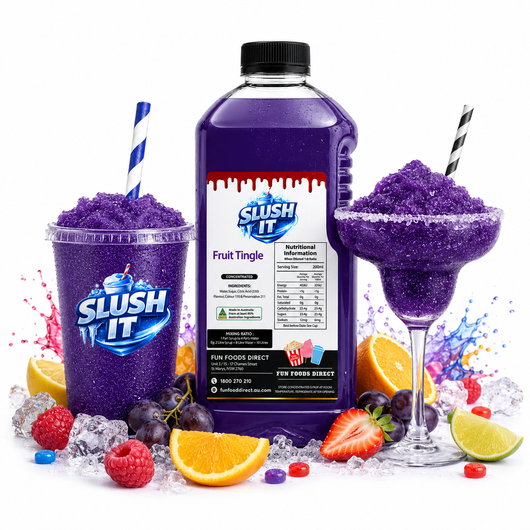
Four Slush It flavours for your next measured test batch
Choose the flavour you want to serve, prepare it exactly as directed and record the machine result. All four products below are genuine 2L concentrates listed in the Fun Foods Direct Slushy Mixes collection.
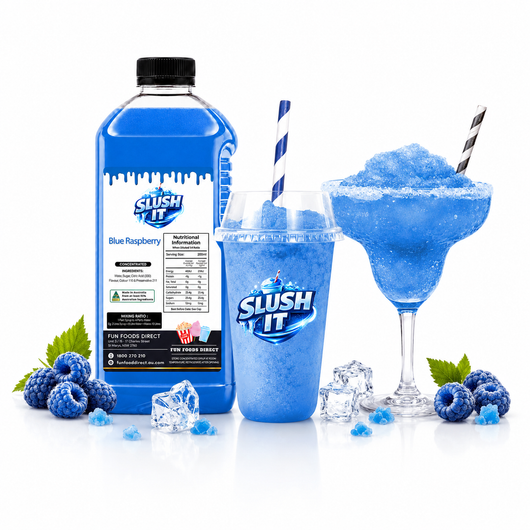
Sweet-tangy berry-style flavour; standard 1:4 preparation.
View Blue Raspberry →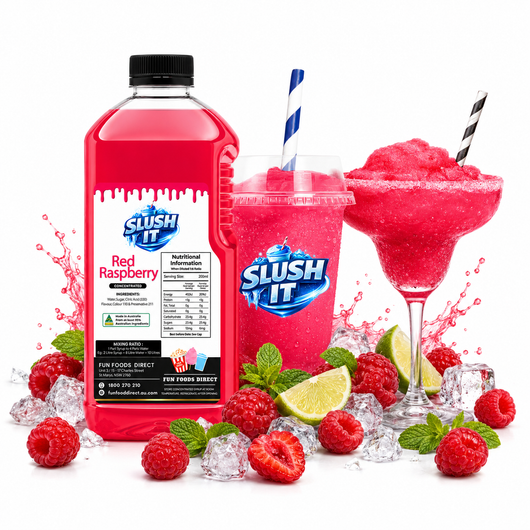
Bright raspberry-style option for cafés, events and home setups.
View Red Raspberry →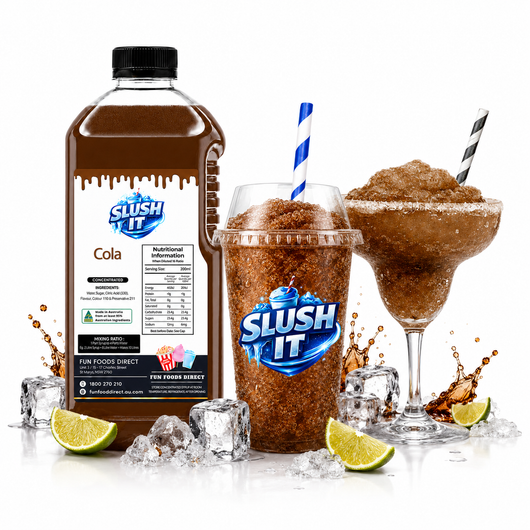
A six-step method to get repeatable slushy texture
For the next safe, fresh batch, isolate one variable at a time. This is also a useful training routine for staff or volunteers who operate several machines.
Stop and assess
If frozen solid, jammed or making unusual noise, stop the equipment and follow the manufacturer's safe restart procedure.
Read both labels
Check the exact syrup directions and machine's compatible drinks, fill limits, modes and operating instructions.
Measure fresh mix
Prepare a clean, measured batch at the product's specified ratio, without extra water or untested additives.
Start cold
Use cold water and properly handled pre-chilled mix when appropriate; keep batches food-safe before filling.
Run the right mode
Use the correct programme or consistency setting and stay within the machine's designated volume range.
Record one result
Note the time, room conditions, texture and any authorised single setting adjustment before the next trial.
Copy this batch log into your shift notes
Keep the same basic record across flavours and shifts, rather than troubleshooting from memory.
Match the symptom to the first safe check
This is a triage guide, not a substitute for the manufacturer’s service manual. If the appliance is mechanically abnormal, stop and get authorised support.
Swipe across for the possible cause and first action →
| What you notice | Possible issue | First sensible action |
|---|---|---|
| Solid blocks / stiff auger | Over-dilution, excessive firmness, circulation issue | Stop if binding; verify recipe and approved settings before restarting |
| Cold but fully liquid | Over-concentrated mix, unsuitable additives, incomplete cooling | Check recipe, programme and starting temperature |
| Thin only during busy service | Frequent warm refills, high heat load, insufficient recovery | Use properly prepared cold refills; review rated machine capacity |
| One tank behaves differently | Different mix, tank settings, assembly or cooling fault | Compare the two documented recipes and settings; seek service if necessary |
| Weak taste plus hard ice | Too much dilution water | Prepare a correctly measured replacement batch separately |
| Texture changes after new ingredients | Recipe modified with alcohol, juice, sugar or other additions | Return to the verified base recipe and test additives only if approved |
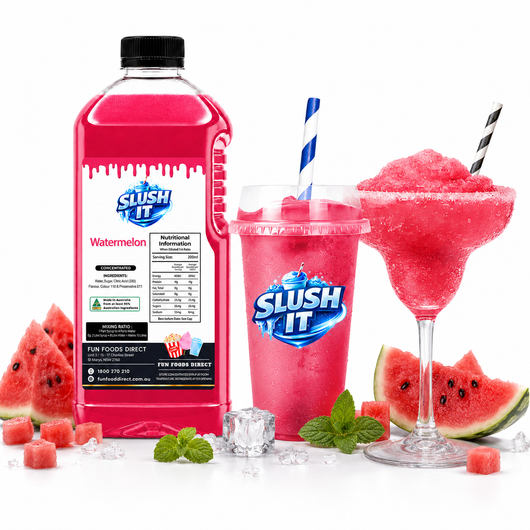
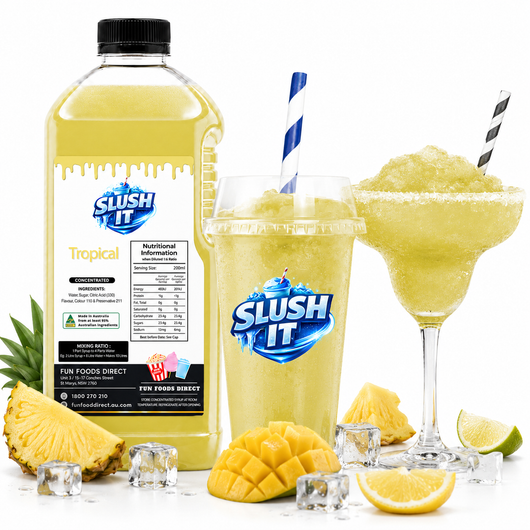
Four more flavours, one clear preparation process
Keep a separate mixing card for every product, even when multiple standard Slush It flavours share the same 1:4 directions. These original store images link to the exact products.
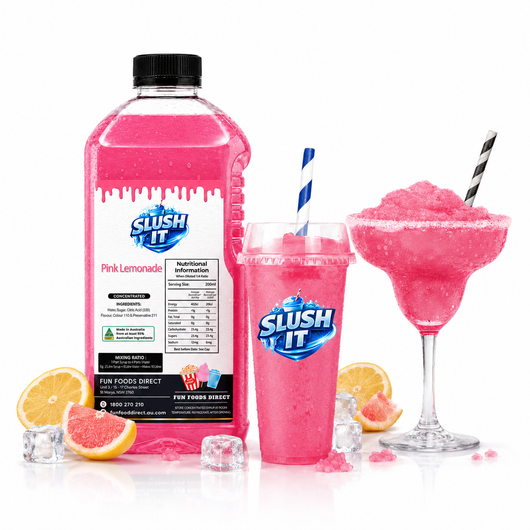
Bright pink lemonade-style option with simple batch mixing.
View Pink Lemonade →Slushy machine troubleshooting FAQs
Clear answers to frequent freezing, mixing and operating questions. Click a question to expand the answer.
Why does my slushy freeze into a solid block?
Possible causes include too much water in the mix, an overly firm setting, low product level or poor circulation. Check the product label and machine manual. If the paddle is binding, stop the machine and follow its safe shutdown instructions.
Why does my slushy stay watery even when it feels cold?
The batch may be too concentrated, too warm at the start, insufficiently processed or incompatible with the selected programme. Added alcohol can also slow ice formation. Verify ingredients and settings before assuming the refrigeration system has failed.
What is the correct water-to-syrup ratio for Slush It?
For the standard Slush It range, mix four parts cold water with one part syrup. For instance, 500mL concentrate plus 2L cold water makes 2.5L prepared mix. Check the bottle because different products, especially sugar-free ones, can have different instructions.
Should I add extra syrup or water to fix a frozen tank?
Not as an improvised correction. Do not pour sugar, syrup or water into a running or partly frozen machine unless your manufacturer specifically instructs you to do so. Use a correctly mixed, separate batch and the authorised thaw, empty and refill process.
Can I add sugar to Slush It Zero to make it freeze?
Do not automatically add sugar. Slush It Zero is formulated separately from standard sugar-containing Slush It. Follow the current product-specific instructions and the machine maker's guidance rather than changing its formula.
How long should a slushy machine take to freeze?
There is no single reliable time for every machine. It depends on the model, its refrigeration capacity, batch size, starting liquid temperature, ambient conditions and programme. Use the machine instructions and watch for its normal ready or texture indication.
Does this advice apply to a Ninja SLUSHi or home machine?
The principles of measuring the correct recipe, using the appropriate programme and respecting fill lines still apply. However, do not copy commercial thickness settings, Brix targets or repair procedures into a home appliance. Follow the instructions for your exact machine model.
Can added alcohol keep my slushy from thickening?
Yes. Alcohol changes the freezing properties of a beverage and can make an ordinary syrup recipe remain too liquid. Use a validated frozen-cocktail recipe and the machine's permitted ingredients and operating guidance; do not guess by adding extra water or sugar.
When should I stop troubleshooting and contact a technician?
Stop immediately for a jammed or stalled auger, abnormal mechanical noise, leaks, electrical concerns, repeated error messages or a cooling fault that persists despite correct recipe and authorised basic checks. Do not bypass safety devices or open service panels.
How should I store pre-mixed slushy liquid safely?
Follow the current product label and your food safety plan. Do not assume a slushy machine provides approved refrigerated storage. If you use dairy, cut fruit or other potentially hazardous ingredients, apply Australian temperature-control requirements, including 5°C or colder for cold holding unless a safe alternative is validated.
Start with the correct mix. Then fine-tune the machine.
Explore the Slush It 2L flavour range, check the individual product directions and create a clear batch card for every tank.