
Choosing your best prep method
Cake Mix vs Baking from Scratch: When Does Each Make Sense?
A good bakery decision starts with the finished product, not a shortcut. Compare flavour control, staff workflow, equipment, batch costs and actual menu needs before choosing a premix or making everything yourself.
STORE
PRODUCTS
Fun Foods Direct's current Bakery Mixes collection includes cake-donut, waffle, pancake, crepe and churro products, but not a conventional sponge or layer-cake mix. A cake-donut premix is not a substitute for cake batter baked in a tin.
01 / Begin with the product
What are you actually making?
A scratch cake starts with an individual recipe: flour, sugar, fats, liquids, eggs or substitutes, raising agents and the baker's technique. A cake mix generally combines a defined set of dry ingredients so that fewer components have to be weighed before mixing. Neither approach automatically gives better flavour, lower cost or a safer product.
The same choice appears in a bakery's wider menu. A cafe may make its celebration cakes from scratch but use a dedicated waffle or pancake premix for breakfast service. A stall may choose a cake-donut mix to keep ring donuts consistent while finishing them with its own glazes. The correct base depends on the item, equipment and recipe specification.
Repeatability is the priority.
- You make the same item frequently and want an established preparation ratio.
- Different staff members need a clear, trainable method.
- Your equipment and finished product match the mix's intended application.
- You plan to test production at multiple batch sizes.
A premix reduces the number of separate dry-ingredient measurements. It does not eliminate correct cooking, safe handling or recipe testing.
Recipe authorship is the priority.
- You sell a signature sponge, butter cake or bespoke celebration cake.
- You need direct control over each ingredient and its proportion.
- The finished texture, flavour or formulation requires original development.
- You have the skills, time and system to document repeatable recipes.
Scratch baking can be consistent too: weigh ingredients, standardise pan sizes and record results. It simply gives you more formulation variables to manage.
Lean towards scratch. Personal technique and a distinctive finish may matter more than a short ingredient list.
Trial a product-specific premix. Standardised measurement may simplify staff handovers.
Keep the custom recipe, but create weighed batch sheets, strict process checks and controlled scaling.
Test a small batch of the relevant premix and a scratch benchmark before committing to bulk stock.
02 / Compare the right variables
Cake mix vs scratch: the practical comparison
There is no universal winner. Use this table to identify what matters for your kitchen, then test both approaches against the same portion size, cooking equipment and quality standard.
| Decision factor | Prepared mix | From scratch |
|---|---|---|
| Ingredient control | Formula is set by the product; you control preparation and permitted finishes. | You select and weigh individual ingredients, with more scope to change the recipe. |
| Production steps | Usually fewer separate dry ingredients, but product-specific resting, proofing or frying may still be required. | More component weighing and recipe steps, depending on your method. |
| Consistency | A standardised base supports a repeatable process if preparation is controlled. | Can be equally repeatable with tested recipes, precise scales and staff training. |
| Menu originality | Useful as a defined base; differentiate through the cooked format and suitable toppings. | Strong option when the crumb, flavour and formula itself are your signature. |
| Allergens and storage | Check the current label for ingredients, allergens and opened-pack guidance. | Check every ingredient and prevent cross-contact; keep a current recipe record. |
| Real cost | Calculate mix, additions, labour, equipment, oil, packaging and waste per sellable item. | Calculate all purchased ingredients and the same operating costs per sellable item. |
A mix is not a guarantee of cost savings or a particular yield. Equipment settings, staff practice, portion size and reject rates affect both methods.
03 / The premix shelf
Explore mixes made for the food you're serving
If premix looks right for part of your menu, choose a product designed for that exact cooking method. These are real Fun Foods Direct products, shown with their original store images and direct links.
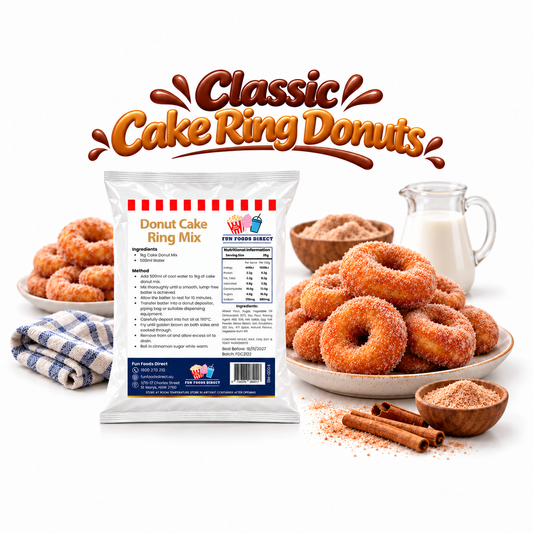
Classic Cake Donut Mix
For cinnamon, ring and iced cake donuts. A water-based batter made for frying, not baking a sponge cake.
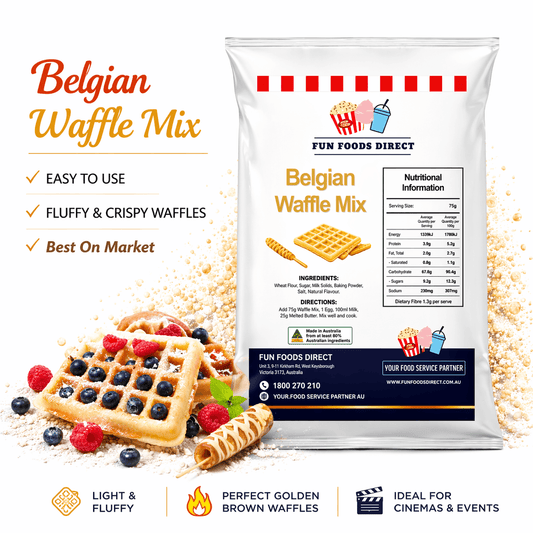
Belgian Waffle Mix
A prepared waffle base for waffle irons: an option for repeatable brunch and dessert service.
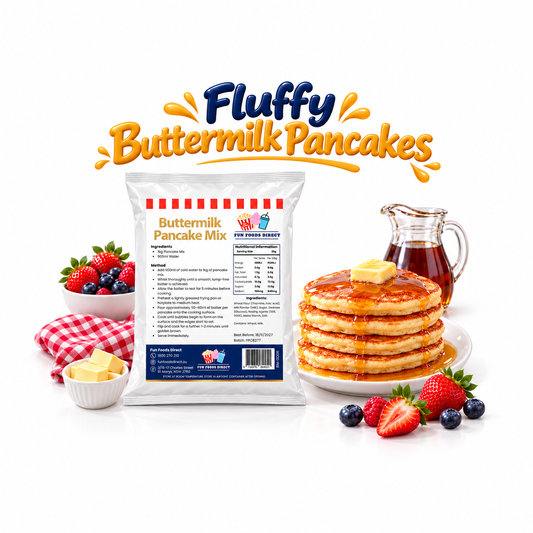
Buttermilk Pancake Mix
Designed for golden buttermilk-style pancakes on a hotplate or pan; useful for planned breakfast batches.

Premium Churro Mix
A churro dough premix prepared with boiling water before piping and frying; not a pourable cake batter.
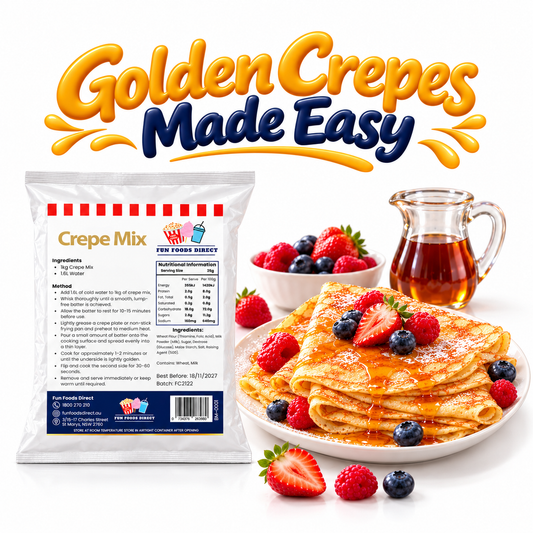
Premium Crepe Mix
For sweet or savoury crepes cooked on a suitable flat surface, with a longer batter rest than pancakes.
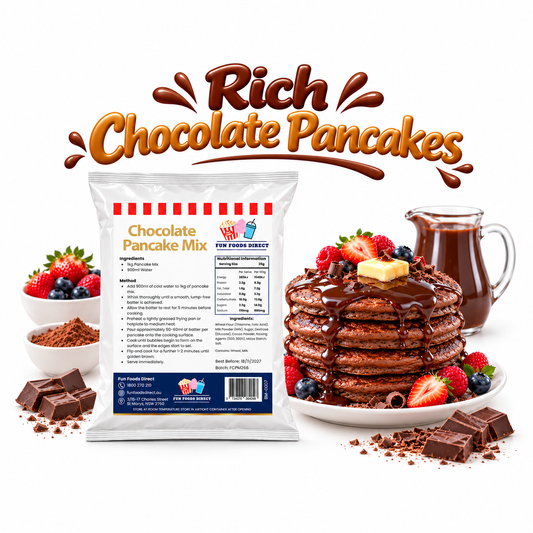
Chocolate Pancake Mix
A cocoa-containing pancake base for sweet breakfast stacks and dessert plates, rather than oven-baked chocolate cake.

Donut Ball Mix
A different workflow: needs instant yeast, lukewarm water and proofing before frying.
Looking specifically for a conventional oven-baked sponge or layer cake? Do not treat the cake-donut, pancake or waffle mixes above as cake-tin substitutes. Review the product category before ordering. Browse all Bakery Mixes →
Different mixes. Different directions.
Verified preparation examples for a 1kg dry-mix batch
The following are product-specific published directions, not a general cake-mix formula. Always confirm the latest product label and adapt the batch to the capacity and instructions of your equipment.
| Product | What to add | Important step |
|---|---|---|
| Classic Cake Donut | 500ml cool water | Rest 10 minutes; product calls for deep-frying at 190°C. |
| Belgian Waffle | 750ml cold water | Rest 5–10 minutes; cook in a preheated waffle iron. |
| Buttermilk Pancake | 900ml cold water | Rest around 5 minutes; use a hotplate or pan. |
| Premium Crepe | 1.6L cold water | Rest 10–15 minutes; cook thin portions on a suitable surface. |
| Premium Churro | 1L boiling water | Rest 5 minutes; pipe and fry using appropriate equipment. |
| Donut Ball | 20g instant yeast + 480ml lukewarm water | Mix, shape and proof before frying; not water-only. |
Ratios are for their named products only. Prepared batter volume is not a verified count of cooked saleable portions. If a page and your physical pack disagree, follow the current approved label and ask the supplier to confirm.
04 / Four real kitchen situations
When does each approach actually make sense?
Look beyond a simple “convenient versus homemade” argument. Menu position, service rhythm and finishing requirements often matter more.
Your signature birthday cake
A customer wants a specific sponge texture, filling and decorative finish. A tested scratch recipe gives you a straightforward route to controlling the formulation. Because the linked Fun Foods Direct collection does not currently list a traditional cake-tin mix, don't promise that its cake-donut premix will produce a birthday cake.
The Saturday waffle rush
A limited breakfast menu needs the same waffle cooked across different shifts. Trial the Belgian Waffle Mix in your actual iron at the labelled ratio. Log rest time, batter weight, cook settings and customer-facing texture before making it a routine purchase.
Freshly fried cinnamon donuts
A ring-donut operator might compare a house cake-donut batter with Classic Cake Donut Mix. Both require a controlled fryer and safe oil handling. A purchased mix can standardise the dry base while the stall decides how to portion, fry and finish each batch.
A specialty menu with a simple base
A dessert bar could keep its signature cakes fully scratch-made while using Chocolate Pancake Mix for chocolate breakfast stacks. Finishes such as fruit, cream and sauces can create menu variety without calling the pancake mix a chocolate cake mix.
05 / Test before you commit
Run a small three-batch kitchen trial
Instead of choosing from marketing promises, give both methods a fair test. Pick one finished item, such as a waffle or cake donut, and measure these five things over three manageable batches.
Fix the specification
Use the same serving size, equipment, toppings and acceptable appearance for each method. Do not compare a large scratch item with a smaller premix one.
Follow the correct formula
Use the precise product label for a premix. For scratch, use a documented tested recipe. Record dry weights, liquid quantities and actual mixing sequence.
Time the entire job
Record preparation, resting or proofing, cooking, cleaning and portioning separately. A shorter ingredient list does not necessarily mean a shorter total service cycle.
Count sellable portions
Weigh or measure portions. Record every rejected or wasted item and its reason. Do not turn a dry-mix weight or batter volume into a promised yield.
Review on the same scorecard
Have the same testers assess texture, flavour, appearance, workflow and food-safety practicality. Reconcile the figures before setting a menu price.
Document the winning process
Write one batch sheet with approved quantities, equipment settings, holding rules and allergen notes. Repeat it in ordinary service before increasing order size.
06 / A costing reality check
Price the finished item, not just the flour.
Two recipes with similar ingredient bills can have different outcomes once staff time, cooking oil, energy, toppings, packaging and unsuccessful portions are included.
Use exactly the same costing method for scratch and premix trials. Compare the total batch cost divided by sellable output, then assess whether the taste and workflow meet your standard. Your selling price and margin should be calculated separately.
Example only: $70 total batch cost ÷ 35 saleable portions. Replace every assumption with your own invoices, staff rates, actual measurements and recorded losses; no savings are promised.
07 / Quality isn't optional
Storage, allergens and equipment checks
Good decisions protect customers and keep preparation repeatable. A packaged dry premix and a prepared batter are not the same food-storage situation.
Dry mix & allergen controls
Check the current product label for ingredients, best-before date, storage instructions and allergens. For example, the Classic Cake Donut Mix listing declares wheat, milk, egg and soy ingredients, so “just add water” does not mean dairy-free or egg-free. Keep containers sealed, use clean dry utensils and prevent cross-contact.
Prepared batter & cooking
Make only what you can manage safely and follow the label, equipment manual and your food-safety procedures. Potentially hazardous foods generally require cold holding at 5°C or below or hot holding at 60°C or above. Use appropriate fryer, waffle-iron or hotplate practices and verify that finished food is cooked through. See FSANZ temperature guidance.
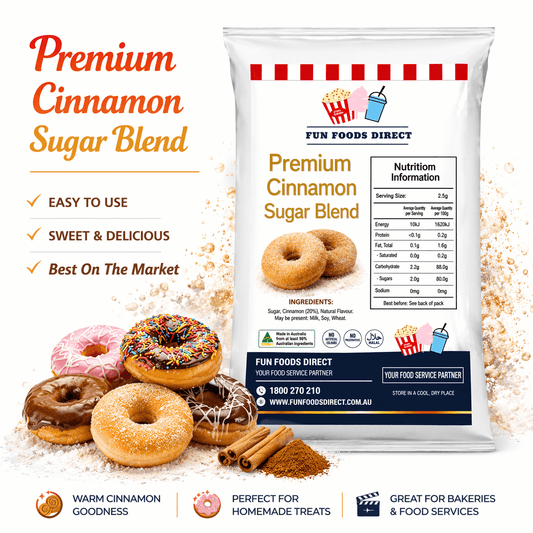
One finishing product, several applications
After making donuts, churros, waffles or pancakes with the appropriate base, a labelled topping can simplify the final step. Explore Fun Foods Direct's Premium Cinnamon Sugar Blend for coating or sprinkling cooked products; check portions and allergens as part of your recipe specification.
See the Cinnamon Sugar Blend →08 / Frequently asked questions
Questions bakers ask before choosing a mix
Is cake mix better than baking from scratch?
Neither is automatically better. A product-specific mix can reduce separate ingredient measurements, while scratch baking offers full formulation control. Compare the same finished product on taste, consistency, process, safety and actual cost before deciding.
Can I bake a sponge cake using Classic Cake Donut Mix?
Do not assume so. Fun Foods Direct's Classic Cake Donut Mix is designed for cake-style donuts that are fried, not conventional sponge or layer cakes baked in tins. Follow the named product directions and use an appropriate cake recipe or specifically labelled cake mix for oven cakes.
Does buying premix always save money?
No. Pack pricing is only one part of the calculation. Include any extra ingredients, labour, equipment, energy, oil, packaging and rejected portions, then divide by your actual sellable yield. Which method costs less depends on your operation.
Are all bakery premixes prepared with the same amount of water?
No. For example, the published 1kg directions vary from 500ml cool water for Classic Cake Donut Mix to 750ml for Belgian Waffle Mix and 1.6L for Classic Crepe Mix. Donut Ball Mix additionally needs instant yeast. Use each individual label.
Can I add eggs, milk or extra flavour to any mix?
Only where a product specification permits it or you have tested and documented the change. Extra liquid, fat, sugar or inclusions may affect texture, cooking and allergen statements. Finishing cooked products with toppings is often a simpler way to vary a menu.
Are just-add-water mixes egg-free or dairy-free?
Not necessarily. Some mixes contain dried egg or milk ingredients even if water is the only liquid added during preparation. Check the current pack's allergen statement and assess every additional ingredient and cross-contact risk.
How many portions will one kilogram of mix make?
There is no universal portion count across the collection. Prepared mass, batter expansion, machine shape, serving size and cooking losses differ by product. Complete a controlled batch, count acceptable finished portions and use that measured result for ordering and costing.
Which method is best for a small cafe or first-time operator?
Start with your menu and equipment. Trial a relevant premix for a repeat item such as waffles or pancakes if you want a standard preparation process; use scratch recipes for items whose distinctive cake formula is central to your offer. Choose after testing, not from a blanket rule.
Make your menu decision with confidence
Keep the signature. Simplify what makes sense.
Scratch baking and commercial premixes can share the same kitchen. Start with the finished product, test a correctly matched formula, document your results and choose the method that makes your menu easier to deliver without compromising your standards.
Shop genuine Fun Foods Direct Bakery Mixes →