
How to Make Fluffy Fairy Floss Consistently
A beautiful fairy floss cloud starts long before the first strand appears. Learn a repeatable workflow for light, airy portions—from dry sugar and a prepared machine to a loose wind and a fresh handover.

For fluffy, consistent fairy floss, start with clean, fully dry equipment and suitable ready-to-use sugar. Follow your specific machine's loading and preheat directions; gather strands loosely onto a clean stick without pressing them tight, then serve promptly. Keep the sugar sealed between fills and use a simple batch log to make the technique repeatable.
What you'll learn—and what actually makes the difference
Fairy floss looks effortless, but operators can unknowingly change several things between serves. Use these four control points to keep the process consistent.
Why this guide is different: Our fairy floss science article explains how spun sugar forms, while this guide is a repeatable production standard for training staff and keeping daily output consistent.
The 7-step fluffy fairy floss routine
Use this as an operator checklist, but always let the machine's operating manual overrule general advice about filling, heat, startup sequence and cleaning.
Build a dry, organised station
Place the fairy floss machine on a stable, level surface with the clearances, guards and electrical setup required by its manufacturer. Keep serving sticks within reach but outside any hot or rotating area. Dry the approved bowl and food-contact equipment completely after cleaning. For outdoor events, avoid exposed wind and moisture where possible, using only protection approved for the machine.
Use the right sugar—and keep it sealed
Choose a sugar that your machine manufacturer permits. Fun Foods Direct's ready-to-use fairy floss sugars are already flavoured and coloured, so do not automatically add water, liquid colour or extra flavouring. Work with clean, dry utensils; open the pack only as needed and close it again promptly. Humid air can make dry sugar clump before it even reaches the spinner.
Preheat using your model's instructions
A properly prepared machine helps sugar melt and emerge as fine strands. Fun Foods Direct's general guidance mentions roughly 3–5 minutes of preheat for suitable machines; this is not a universal instruction. Some manufacturers specify a different switch sequence or shorter heating stage. Follow your specific manual instead of copying settings or timings from another unit.
Load only the approved amount
Never guess the spinner head's capacity. Check the manual and ensure the equipment is in its required safe loading state; some commercial machines explicitly require the head to be fully stopped before sugar is added. Measure the approved load consistently, avoid overfilling and keep loose sugar out of places where the manufacturer prohibits it.
Watch the first strands—not just the clock
Look for a steady web of fine strands in the designated collection area. Sugar that burns, smokes or forms heavy, coarse clumps is a reason to stop the experiment and consult the operating guidance. If production is inconsistent, check basic conditions first: dry sugar, clean spinner, approved loading and proper machine setup. Do not reach into the operating head or attempt an internal repair.
Wind the web loosely to preserve air
Choose a clean, dry, undamaged stick. In the safe collection area defined by your machine maker, catch the forming web and rotate the stick lightly so the strands build volume instead of being crushed against one another. Some Gold Medal machine instructions describe lifting the web and wrapping outside the pan to preserve large air pockets; adapt the technique only where your own machine manual permits it.
Serve promptly and record what worked
Hand the portion to the customer as soon as practical or transfer it to appropriate dry, food-safe packaging where permitted. Finished fairy floss can absorb moisture and lose height, especially in humid air. Record the flavour, operator, conditions, approved load and appearance of the finished serve; these notes help you repeat a successful setup rather than rediscovering it during every shift.
Fairy floss machines have hot, high-speed rotating components. Never touch the spinning head, bypass safety guards, pour sugar into a running head where prohibited, or clean the machine while connected to power. Stop and consult the manufacturer or a qualified technician if you encounter abnormal vibration, burning, smoke or electrical faults.
Six ready-to-use flavours for a consistent spinning routine
Changing your menu colour should not mean inventing new preparation instructions. These are the six current flavours in the Fun Foods Direct Fairy Floss collection. Product options and pack sizes vary, so check the current listing and the physical label before purchasing or using them.
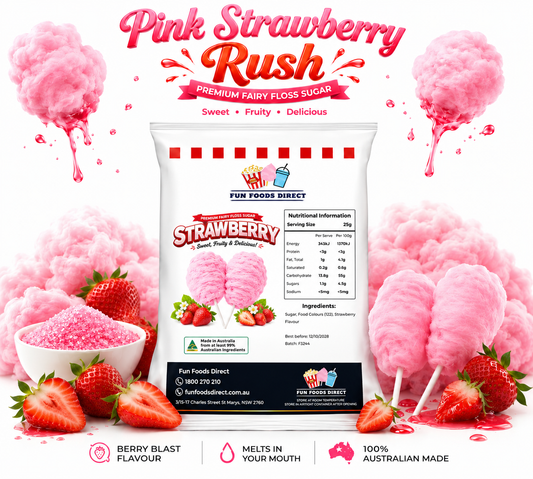
Pink Strawberry Rush
A pink, strawberry-led sugar for a bright event menu. Use it as the reference flavour when training operators to make repeatable portions.
View this sugar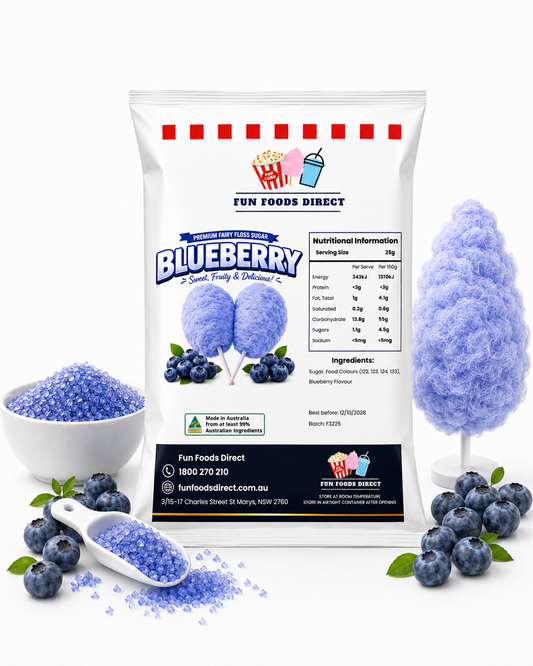
Blueberry Blast
Blueberry flavour with a blue presentation. A useful contrasting option for testing collection technique without inventing a new sugar formula.
View this sugar
Red Raspberry
A raspberry-style option with pink-red colour. Keep your loading and serving procedure the same when rotating between approved flavours.
View this sugar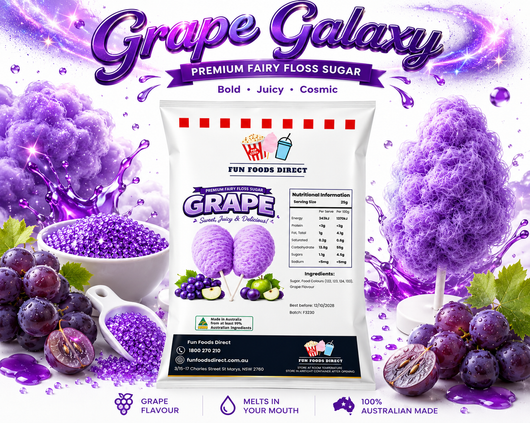
Grape Galaxy Purple
A bold purple option for themed service. Test the actual spun appearance under venue lighting rather than relying on the pack photo.
View this sugar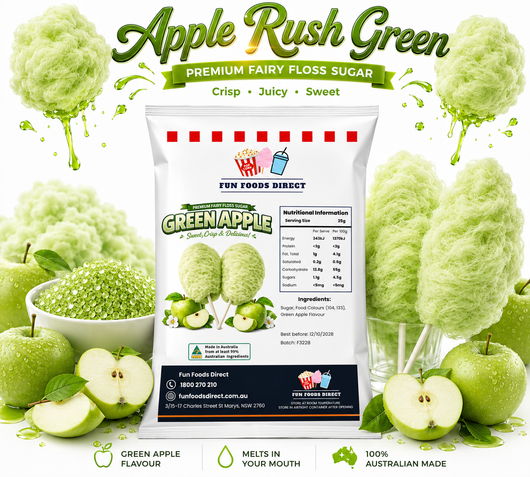
Apple Rush Green
A green apple-flavoured choice for party and carnival counters; keep the original dry sugar sealed between machine fills.
View this sugar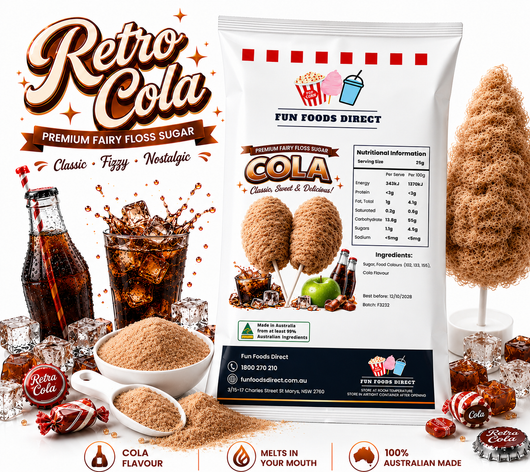
Retro Cola Brown
A distinctive cola-flavoured alternative. Use clear flavour labels so customers do not have to identify the product by its colour.
View this sugarServing essential: The store also offers 25cm Bamboo Fairy Floss Sticks (100-pack). Keep sticks clean and dry, inspect for damage and use the safe collection method specified for your equipment.
View serving sticks ↗Run a five-serve consistency test
Instead of promising that every scoop or pack produces an exact number of clouds, test your own setup. Keep the same sugar, machine, operating conditions and stick technique for five consecutive serves. Change only one variable during a later trial, such as the approved collection method.
How much sugar does your service use?
Weigh your sealed sugar container before and after making five serves, away from the machine. Suppose the decrease in weight is 100g.
Example average: 20g of sugar withdrawn per finished serve, including any process loss. It does not mean every portion contains exactly 20g or that every machine gives the same yield.
For accurate testing, count the completed serves, record failed batches and avoid mixing different sugar types in one trial.Measure consistency, not only volume
Photograph each portion against the same background or record its shape at handover. Note whether it is airy, compact, sticky or uneven. Log humidity or weather conditions when they are relevant, rather than assuming a fixed holding time.
Cost illustration: If sugar hypothetically costs $12/kg, 20g used per serve equals $0.24 in sugar input. Add sticks, packaging, staff time, electricity and waste to calculate a fuller cost.
| Test factor | Keep the same | Record after each serve |
|---|---|---|
| Sugar | Same verified flavour, dry storage and approved load | Any clumping or poor feed |
| Machine | Approved startup sequence and safe operating condition | Even strands or unusual symptoms |
| Collection | Same stick type and operator technique | Loft, density and shape |
| Service | Same handover and packaging practice | How the portion looks when presented |
| Stock | Same method of weighing sealed sugar supply | Grams used per completed serve, including losses |
On a narrow phone, swipe the table horizontally to see all columns.
Why use five serves? One perfect cone may be luck. Five consecutive servings reveal whether your method is teachable. Repeat the same trial after a flavour change, a new operator or a shift to more humid conditions.
Four checks for every fluffy portion
Agree on a visual standard before service so staff can judge each result the same way. A portion can look large without necessarily being light, stable or neatly collected.
Loft
Does the floss have open volume, or has it been compressed tightly against the stick?
Strands
Are the threads fine and soft-looking rather than heavy, coarse or visibly burnt?
Handle
Is the sugar secure on a clean, undamaged stick without being wound too densely?
Handover
Does the portion reach the customer before exposure to moisture makes it tacky or smaller?
What if fairy floss loses its fluffiness after spinning?
Consider the full sequence rather than immediately turning up the heat. Humid air and contact with water can make spun sugar sticky. Overworking the strands during collection can compact them, while a delay between making and serving can reduce their apparent size. Correct the controllable conditions and test again using the same sugar.
For an outdoor stall, watch the weather and adjust service timing. Store the dry sugar sealed, avoid making a large number of uncovered portions far ahead and use suitable dry, food-safe packaging when a short holding period is necessary.
When the next batch looks wrong
| What you notice | Likely contributing factor | First safe response |
|---|---|---|
| Flat, tightly wound floss | Collection technique compressing the web | Practise a lighter wind in the manufacturer's designated collection area. |
| Sticky or shrinking floss | Humidity, wet utensils or prolonged exposure | Keep materials dry and sealed; shorten the time before serving. |
| Inconsistent or coarse strands | Loading, machine condition, residue or unsuitable settings | Stop as appropriate, review the manual and inspect only when cool and isolated from power. |
| Little or no floss | Improper startup, clogged equipment or unsuitable sugar | Check approved preheat and loading instructions; stop if a fault persists. |
| Burning, smoke or vibration | Possible unsafe machine operation or fault | Stop using the equipment and seek manufacturer or technician guidance. |
This is an operator's first-check guide, not a substitute for the exact machine manual or qualified servicing.
Write a one-page shift standard
Consistency is easiest when each operator follows the same approved routine. Create a laminated card with your machine model, permitted sugar type, startup sequence, approved fill amount, safe collection zone and shutdown procedure. Add one photograph of a good finished portion as a visual target.
At the beginning of a new shift, confirm that the equipment is clean and dry, that the correct labelled sugar is available and that the sticks are protected. Use the first few portions as a controlled quality check. Keep a short record of unusual humidity, missed serves and the adjustments made within the limits of the machine manual.
Do not borrow a temperature or feed quantity from another business. Different machines—and even different manufacturer models—can have substantially different procedures.
Food safety reminder: Clean before sanitising, protect sugar and finished food from contamination, and follow the equipment manufacturer's cleaning method. Always switch off, unplug and allow the equipment to cool before maintenance or cleaning where the manufacturer instructs. Check the current package for ingredient, allergen and dietary claims; colour or flavour names do not establish allergen suitability.
Frequently asked questions
Practical answers for small party setups, market stalls and commercial fairy floss service.
How do I make fairy floss fluffier rather than tightly packed?
Use a light, loose winding technique in the safe collection area approved by your machine maker. Avoid pressing the strands tightly against the stick. Start with correctly prepared, dry equipment and suitable sugar.
Does every fairy floss machine need the same temperature?
No. Heating controls, startup procedures and machine capacity differ by model. Use your actual machine's instructions. Do not assume that a temperature or dial setting from another machine is transferable.
Do I need to add colour or flavour to Fun Foods Direct sugar?
No. The six current products are marketed as ready-to-use coloured and flavoured fairy floss sugars. Follow your selected product label and check that your machine accepts prepared flavoured sugar.
Why does fairy floss become sticky after I make it?
Spun sugar is moisture-sensitive. Humidity, wet serving tools, liquid contact and long exposure can soften it. Keep sugar and utensils dry, close opened packs and serve freshly made portions promptly.
Can I add more sugar while the machine is spinning?
Only follow the loading instructions for your specific machine. Some commercial manuals expressly require the head to stop before loading; never improvise a refill while hot or spinning equipment is operating.
How long should I preheat a fairy floss machine?
There is no universal time. Fun Foods Direct's general guidance mentions about 3–5 minutes for suitable equipment, but the model's actual manual and startup sequence take priority.
How much sugar should I use per serve?
Follow the machine's approved head load, then measure your real sugar consumption and finished portions. For example, 100g withdrawn from the supply over five completed serves averages 20g per serve including any process losses, but this is only an illustrative calculation.
Can I prepare fairy floss hours before an event?
It depends on humidity, food-safe packaging and your own holding tests. No fixed fluffy holding time is guaranteed. Fresh-to-order or shorter production runs are generally easier to control when conditions are damp.
Are bamboo sticks suitable for collecting fairy floss?
The current Fun Foods Direct collection offers 25cm bamboo sticks in a pack of 100. Inspect for damage, keep them clean and dry, and use them only in the collection area approved by your machine manufacturer.
When should I stop and call for equipment service?
Stop using a machine with abnormal vibration, persistent burning or smoke, electrical faults, damaged guards or problems that remain after safe operator checks. Contact the equipment supplier or a qualified technician rather than performing unapproved internal repairs.
Make the method repeatable. Make the menu colourful.
A consistent routine starts with suitable ready-to-use sugar and clean collection tools. Choose flavours from the current Fun Foods Direct range, verify your machine's requirements and make one great sample serve the standard for the next shift.
Shop all fairy floss supplies ↗Preparation and safety sources: Fun Foods Direct Product Help & Guides; current Fairy Floss collection and individual product listings; Gold Medal 3038EDX manual (model-specific loading and safety example); and Food Standards Australia New Zealand – cleaning and sanitising. Manufacturer examples do not establish compatibility or settings for another machine.
Editorial note: Portion-weight maths, cost calculations and quality tests are illustrative operational examples, not official product yields, prescribed feed amounts or guaranteed performance claims. Product formulations, pack options and instructions may change; confirm the current label before use.