
How to Measure Bakery Mix Accurately for Consistent Results
Great waffles, pancakes, donuts and churros start before the mixer runs. Learn how to weigh dry premix, measure the right liquid, scale a recipe without changing its ratio and give every team member the same dependable method.
Quick answer
Weigh the dry mix in grams, measure the liquid as specified on that product, and record both. Place a clean bowl on a reliable scale, press tare to zero, add the required powder, then measure the correct water volume and temperature. There is no single mixing ratio for all bakery premixes.
Three simple tools make a better batch
A premix makes the dry ingredient blend more convenient, but it does not eliminate the need for accurate measuring. If the amount of powder or liquid changes, the batter or dough may behave differently even when the same bag is used.
A dependable scale
Use a stable, clean digital scale with a capacity suited to your mixing bowl. Check its zero reading and follow its manufacturer's accuracy or calibration instructions. For small added ingredients, use a scale that can read the required amount precisely.
A marked measuring jug
Choose a clean jug with readable metric graduations. Set it on a level bench and read the water level at eye height. A large bucket with rough markings is not ideal for a small test batch.
A batch card
Keep the product name, lot number, dry mix weight, water volume and temperature, mixing method, rest time and operator on one card. It is much easier to repeat a good batch when the preparation is recorded.
Why scooping is not the same as weighing
A cup measures volume, not the mass of powdered mix inside it. Powder can settle or pack more tightly, so two equal-looking scoops may contain different weights. Unless your product specifically gives a tested scoop measure, use grams for the dry portion.
The seven-check bench routine
This is a practical staff procedure for making small test batches or regular café prep. Use it alongside the product label and the directions for your mixer, waffle iron, fryer or hotplate.
Read the correct bag
Confirm the exact product, pack instructions, best-before date and ingredients. A waffle ratio should never be copied onto pancake, churro or donut-ball mix.
Prepare the station
Use clean, dry bowls and scoops. Keep flour dust, splash water and other ingredients out of the opened dry-mix bag; clean the scale platform before use.
Zero the empty bowl
Place the bowl on the scale, let the reading settle and press TARE. Only then add dry premix. Otherwise the container's weight is counted as ingredient.
Stop at target grams
Add the dry mix gradually. If you pass your target, remove the excess with a clean dry scoop rather than trying to correct the liquid by eye.
Match volume and heat
Measure the instructed water volume and temperature separately. Churro mix requires boiling water; donut-ball dough calls for lukewarm water and separate instant yeast.
Follow the product method
Whisk, mix gently, or knead according to the product rather than forcing every preparation into one workflow. Respect any rest or proofing stage.
Check the first output
Note batter consistency, portion weight, equipment setting and finished appearance. Make controlled changes only when you can identify which variable changed.
Eight mixes, eight preparation checks
These figures are taken from individual Fun Foods Direct product pages. They demonstrate why accurate measurement starts with the particular product, not a generic “add water” rule. Confirm the current bag instructions before each production run.
| Product | Dry mix | Water per batch | Method note |
|---|---|---|---|
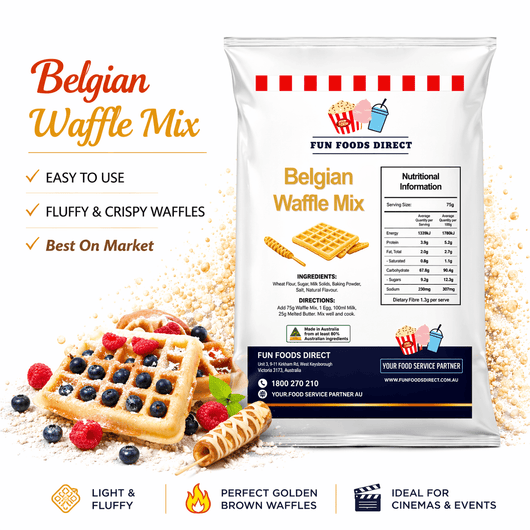
| Belgian Waffle Mix | 1,000g | 750mL cold | Rest 5–10 minutes |
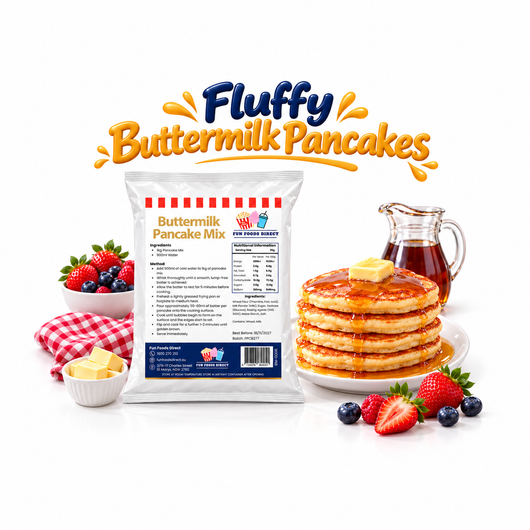
| Buttermilk Pancake Mix | 1,000g | 900mL cold | Rest around 5 minutes |
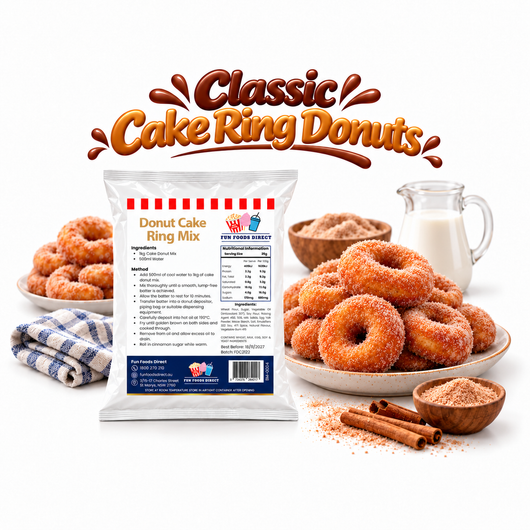
| Classic Cake Donut Mix | 1,000g | 500mL cool | Rest 10 minutes; cake-style fried donut |
| Premium Churro Mix | 1,000g | 1,000mL boiling | Rest 5 minutes; use heat-safe tools |
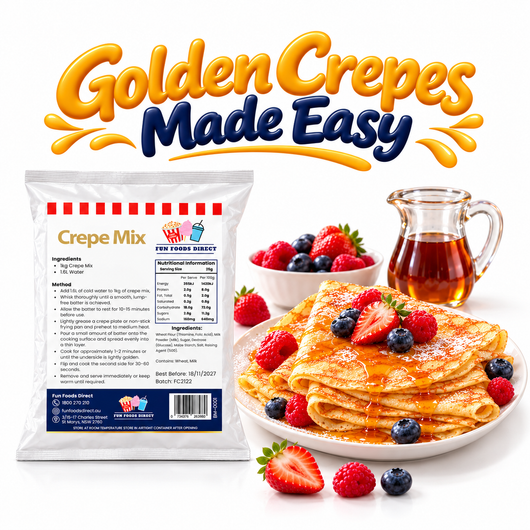
| Premium Crepe Mix | 1,000g | 1,600mL cold | Rest 10–15 minutes |
| Chocolate Pancake Mix | 1,000g | 900mL cold | Rest around 5 minutes |
| Donut Ball Mix | 1,000g | 480mL lukewarm | Also add 20g instant yeast; proof as directed |
| Crispy Batter Mix | 1,000g | 1,500mL cold | Mix gently; avoid overmixing |
↔ On a phone, swipe inside the table to see every column.
Important: weight, volume and temperature are different measurements
“1kg of powder + 750mL water” means a mass of powder and a volume of water. It does not imply 1,750mL of final batter or a guaranteed number of cooked portions. Water temperature and extra ingredients must also match the specific recipe.
Start with the right premix
These four genuine store products are useful starting points for breakfast and dessert menus. Open a product card to check its current pack options, ingredients and complete directions.
Scale the ratio, not the guesswork
Small batches are valuable for recipe testing and quieter periods. The liquid requirement changes in the same proportion as the dry mix. For products with extra ingredients, scale those separately too.
Use the exact product-specific water amount from its instructions. This formula only scales the quantities; it does not change rest times, safe handling or machine operating requirements.
800g dry mix
800 ÷ 1,000 × 750 = 600mL cold water. Keep the Belgian Waffle Mix resting stage and waffle-iron procedure.
350g dry mix
350 ÷ 1,000 × 900 = 315mL cold water. A smaller batch still needs the correct resting and hotplate method.
500g dry mix
Half of the 1kg recipe needs 240mL lukewarm water plus 10g instant yeast. The yeast is not optional and the proofing stage still applies.
A 500g mini-batch reference
Need a smaller trial? These are mathematically halved versions of the verified 1kg instructions, not separately validated manufacturer batch tests. Keep all mixing, rest and equipment directions unchanged unless the label says otherwise.
| Mix | Dry mix | Water to measure | Additional instruction |
|---|---|---|---|
| Belgian Waffle | 500g | 375mL cold | Rest 5–10 min |
| Buttermilk Pancake | 500g | 450mL cold | Rest around 5 min |
| Classic Cake Donut | 500g | 250mL cool | Rest 10 min |
| Premium Churro | 500g | 500mL boiling | Use heat-safe equipment |
| Premium Crepe | 500g | 800mL cold | Rest 10–15 min |
| Donut Ball | 500g | 240mL lukewarm | Plus 10g instant yeast |
↔ Swipe the table sideways if your mobile screen is narrow.
What about 10kg or 20kg bags?
A larger bag is a purchasing format, not an instruction to mix the whole quantity at once. Weigh the amount you can safely process in your equipment, calculate its matching water and any extra ingredients, and keep each lot traceable. Large-scale proofing, mixing and frying capacity must be checked against your actual machinery.
Different mixes demand different handling
The same measurement discipline can support churros, chocolate pancakes, filled donut balls and savoury crispy batter. They are not interchangeable products: their liquid temperatures, preparation stages and intended applications differ.


Donut Ball Mix
1kg mix + 480mL lukewarm water + 20g instant yeast
View product & instructions
Hot-water safety matters
For Premium Churro Mix, the product specifically calls for boiling water. Use a heat-resistant bowl and tools, avoid splashing, and keep staff trained in safe hot-water and fryer procedures. For Donut Ball Mix, the specified water is lukewarm at around 27–35°C and yeast is added separately. Neither recipe should be prepared with the other's water temperature.
Six measurement mistakes worth catching early
If today's results differ from yesterday's, check the preparation record before changing the formula. The first question is not “how much more water?” but “which measurement or step changed?”
1. Forgetting to tare
Clue: the dry mix amount includes the container. Fix: zero an empty bowl before weighing and confirm the final target in grams.
2. Using a scoop as a scale
Clue: batter varies with how tightly the powder is packed. Fix: weigh the powder each time; reserve scoops for transferring it.
3. Measuring water in the wrong units
Clue: the recipe says 750mL but a staff member guesses “about three cups”. Fix: use a metric jug with readable graduations and keep the original mL notation on the batch card.
4. Ignoring water temperature
Clue: a churro or yeast dough behaves unusually despite correct weights. Fix: record water temperature and use the specific instructions, not an assumed room-temperature recipe.
5. Skipping rest or proofing
Clue: the first and second batches differ even when both are correctly weighed. Fix: use a timer for resting and follow the full proofing process for yeast-raised donuts.
6. Changing multiple variables
Clue: staff adjust water, mix time and cooking temperature together, then cannot explain the result. Fix: return to the verified recipe and change only one controlled parameter at a time when testing.
Build a two-minute batch record
A simple written log gives cafés, food trucks and dessert kitchens a consistent starting point for staff training. It also helps identify the cause of a problem without blaming the premix or guessing about the machine.
Sample record: Belgian waffles
This example uses 500g of Belgian Waffle Mix and 375mL of cold water, scaled from the product's verified recipe. Enter the actual times, equipment settings and cooked yield from your own test rather than using invented numbers.
For a useful audit, also note the first waffle's appearance, whether the centre cooked through and the observed portion weight. Repeating that exact workflow gives future shifts a practical comparison point.
Open the Belgian Waffle Mix preparation page ↗Product: Belgian Waffle Mix
Dry premix: 500g
Cold water: 375mL
Rest: 5–10 min
Product lot: __________
Operator / time: ______
Waffle iron: __________
Portions made: _________
Quality note: __________
One useful costing check
For an illustrative dry-mix price of $10 per kg, a 600g batch uses $6 of dry mix (600 ÷ 1,000 × $10). If that particular trial produces 12 saleable portions, the dry-mix component would be $0.50 per portion. This is not a quoted Fun Foods Direct price or a promised yield; real cost also includes other ingredients, frying oil, packaging, labour, electricity and waste.
Protect the mix before and after measuring
Accurate portions are important, but they do not replace safe storage, allergen controls or appropriate cooking procedures.
Keep dry powder dry
Store sealed bakery premix in a cool, dry location in accordance with its label. Use dry utensils, keep opened bags closed and retain product name, batch details and date marking when transferring powder to another container. See the Fun Foods Direct storage guide.
Treat prepared batter differently
Adding water changes the food's handling requirements. Assess whether a prepared batter or dough is potentially hazardous and follow applicable temperature controls. FSANZ advises 5°C or colder for cold holding of potentially hazardous food, unless a validated alternative applies.
Check declared allergens
Premixes can contain wheat, milk, egg, soy or other ingredients. Review the specific current label and any toppings or added ingredients; prevent cross-contact and communicate accurate allergen information to customers.
Use equipment-specific instructions
Mixers, griddles, waffle irons and fryers differ in capacity and settings. Check safe batch sizes, cook completely as appropriate for the food, and clean and sanitise tools and food-contact surfaces according to their equipment instructions.
Bakery mix measurement FAQs
These are the common questions that come up when a café starts standardising breakfast, donut and dessert batches.
Should bakery mix be measured in grams or cups?
Use grams whenever the product instructions specify a weight. Measuring by cup can vary depending on how finely the powder is packed, while weighing lets staff use a reproducible dry-mix quantity.
What does “tare” mean on a kitchen scale?
Tare resets the displayed weight to zero with the empty bowl or container already on the scale. That way the reading reflects the ingredient you are adding, rather than the bowl and ingredient together.
How much water should I use for 500g of Belgian Waffle Mix?
Based on the current 1kg-to-750mL cold-water recipe, 500g requires 375mL cold water. Follow the product's 5–10-minute resting guidance and the directions of your waffle maker.
How much water goes into 250g of Buttermilk Pancake Mix?
A quarter of the 1kg recipe requires 225mL cold water: 250 ÷ 1,000 × 900 = 225mL. The same approach works for other weights when you use the correct ratio for the specific product.
Can I use the waffle water ratio for churro mix?
No. Belgian Waffle Mix uses 750mL cold water per 1kg. Premium Churro Mix uses 1L boiling water per 1kg. They require different handling, resting and cooking methods.
Is donut ball mix the same as classic cake donut mix?
No. The Classic Cake Donut Mix uses cool water for a cake-style batter. Donut Ball Mix is yeast-raised: its 1kg recipe calls for 480mL lukewarm water plus 20g instant dried yeast, with proofing before frying.
Can I weigh water instead of using a measuring jug?
Some kitchens use scales for liquids, but the published recipes here specify water in millilitres. If you convert that volume to mass, you need a validated conversion and consistent temperature. A clear, accurate metric measuring jug avoids relying on an assumed exact one-to-one conversion.
Does a 1kg bag always make the same number of portions?
No. Actual yield depends on the premix, added liquid, portion size, equipment and waste. Weigh or measure a representative finished portion and record saleable output during a real test batch rather than promising a universal number.
Should I refrigerate leftover prepared batter?
Follow the individual product instructions and assess the food-safety risks of the prepared batter. Potentially hazardous food must be held under appropriate temperature control; do not assume the shelf life of the dry powder applies after water or other ingredients have been added.
What is the most useful staff training change?
Give every operator one product-specific batch card with grams of mix, millilitres of water, liquid temperature, any extra ingredients, mixing method and a rest timer. Then verify the finished result and refine the card using your actual equipment.
Choose the right mix. Measure the right amount.
Explore genuine waffle, pancake, donut, churro and crepe mixes from Fun Foods Direct. Start with the exact instructions for each product, then use the same measured workflow every time.
Shop all Bakery Mixes ↗