
7 Reasons Cakes Sink in the Middle (and How to Avoid Them)
A beautiful rise followed by a sunken centre is frustrating—but the clues are usually visible. Diagnose the dip, change one variable at a time, and give your next cake a better chance of holding its shape.
Practical baking science • Real process checks • Australian bakery-supply options
 RELATED BAKERY MIX
Why does the middle fall?
Most sunken cakes have risen before the centre is strong enough to support that rise. A damp, underbaked centre; inaccurate oven heat; excessive raising agent; unsuitable mixing; or an incorrect tin can all contribute. A dip that appears during baking may have a different cause from a cake that settles only after cooling.
Do not automatically add more baking powder or bake everything longer. Instead, note what the cake looked like, when it collapsed and whether its middle is properly cooked. Those observations turn a vague problem into a useful next-batch test.
This guide is for conventional oven-baked cakes, from butter cakes to sponge-style recipes. The same habit of measuring and controlling variables can improve pancakes, waffles and donuts, but their formulas and cooking methods are different.
For a cake to stand tall, three things need to happen in order.
Air, steam and gases from raising agents help the batter expand. Then proteins and starches set around those bubbles. The finished crumb needs enough strength to hold the new height.
Rise
Bubbles grow as the batter heats. Correct leavening, mixing and ingredient proportions matter.
Set
Heat gradually firms the cake's structure. Edges generally set before the thickest part of the centre.
Hold
When the structure is strong enough, the cake supports its height as gases escape and it cools.
Diagnostic principle: A cake may rise dramatically and still fail if it expands faster than it sets. That is why a beautiful oven rise alone is not proof of a successful bake.
The 7 reasons cakes sink in the middle
Each case gives you an observable clue, an explanation and a realistic first fix. Start with the strongest match instead of changing every part of your recipe.
The centre simply isn't baked through
A cake can look golden at the edges while the middle is still liquid or weak. As the cake cools, the unsupported centre contracts and sinks. This is especially plausible with a deep tin, heavy fruit mixture or a wet, gummy centre.
Check the centre, not only the colour of the top. Do not serve cake containing raw batter.
The oven temperature is different from the setting
An oven that runs cool can delay structure-setting; one that runs hot may brown and firm the outside before the centre catches up. Fan-forced settings, rack position and actual oven calibration all change how a recipe behaves.
Record actual observed temperature rather than assuming the display is accurate.
Too much—or ineffective—raising agent
Baking powder and bicarbonate of soda aren't interchangeable in arbitrary amounts. Too much leavener may make the batter rise rapidly into a fragile, coarse structure that falls. Old or poorly stored raising agents can also change the expected lift.
Never assume more baking powder means a more stable cake.
The batter is mixed too much—or not enough
Overmixing after flour is added can develop an unsuitable texture in some cakes; overcreaming can add so much air that the rise becomes unstable. But undermixing is also a genuine problem: poorly incorporated ingredients or insufficient structure can create dense, gummy areas. The correct endpoint depends on the recipe method.
Keep a note of the mixer speed and time for a repeatable next batch.
The tin is the wrong size or is filled too deeply
A smaller pan holds the same batter in a deeper layer, so the centre takes longer to cook. Shape matters too: a centre-tube pan may support a recipe intended for one, while an ordinary deep round tin may not. Pan materials can also affect how heat reaches the batter.
See the round-tin area example below before swapping pan sizes.
The oven door opened or the tin moved too early
Opening the oven causes heat loss, and moving or knocking a very delicate, partly set cake can disturb its rise. A properly structured cake can tolerate normal handling later in baking; timing is what matters.
Make a note of when the cake dropped, not just how deep the dip became.
The ingredient balance changed
Extra liquid, sugar, fat or fruit can make a batter heavier or slower to set. Swapping flour types, egg sizes, dairy alternatives or sweeteners can also change structure. Even an innocent-looking “splash more milk” may matter in a formula that was already close to its limit.
A familiar recipe is your control batch; use it before experimenting.
Related Fun Foods Direct bakery mixes
Accurate measuring, suitable cooking equipment and following the intended recipe matter just as much for café desserts. Explore these purpose-made bakery mixes—not as cures for sunken sponge cakes, but as separate options for pancakes, waffles and fried treats.
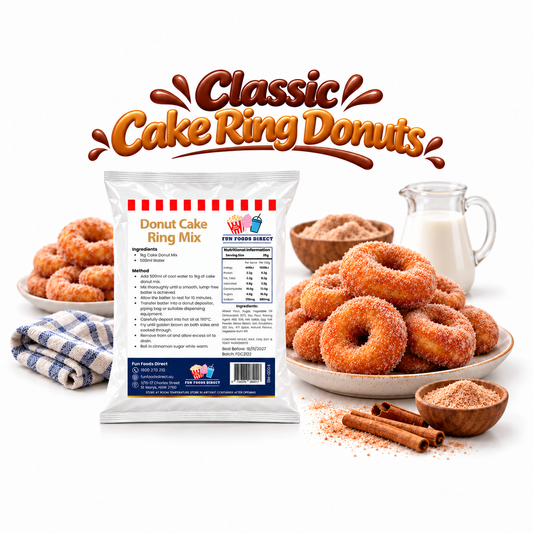
Shop the Bakery Mixes collection →Classic Cake Donut Mix
Made for ring and cinnamon-style donuts—not a substitute for oven-baked sponge cake batter.
View real product →
Belgian Waffle Mix
Official guide: 1 kg mix + 750 mL cold water, rest 5–10 minutes, then cook in a waffle iron.
View real product →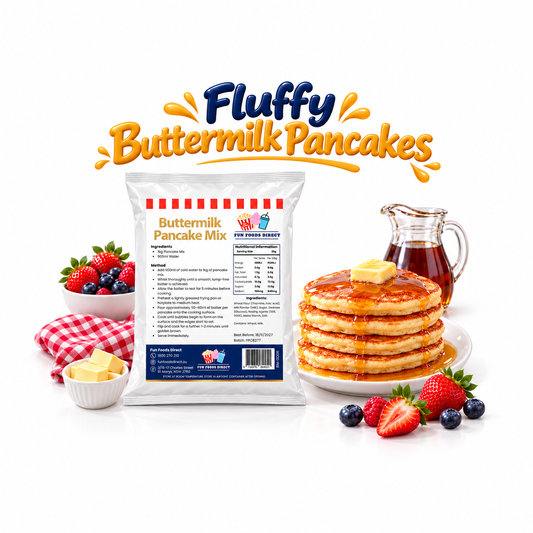
Buttermilk Pancake Mix
Official guide: 1 kg mix + 900 mL cold water; whisk smooth, rest 5 minutes and cook.
View real product →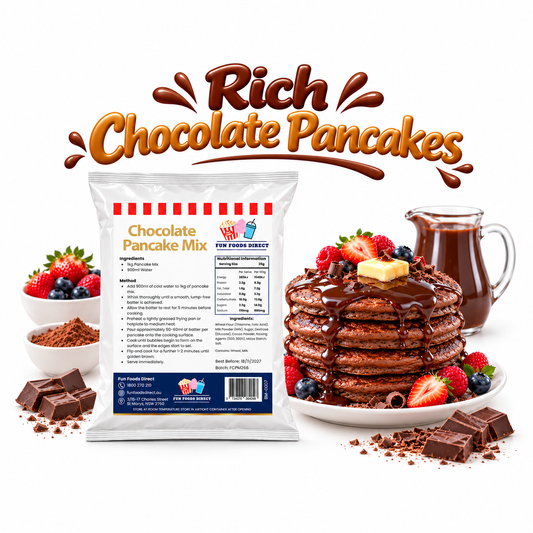
Chocolate Pancake Mix
Chocolate-flavoured, just-add-water pancake mix for a dedicated breakfast or dessert item.
View real product →
Premium Crepe Mix
A purpose-made batter for cooking thin crepes on a suitable hot surface—not for tall cakes.
View real product →
Premium Cinnamon Sugar
A flavoured coating for donuts or finishing sprinkle for pancakes, crepes and waffles.
View real product →A useful comparison: the published Belgian Waffle Mix instructions use 750 mL water per 1 kg, whereas Buttermilk Pancake Mix specifies 900 mL per 1 kg. These are verified product-specific quantities. Do not transfer either ratio to a cake recipe, another mix, or a different product without checking its instructions.
Read the cake's symptoms
Use this table as a starting point, not a definite diagnosis. Several faults can produce a similar-looking result.
| What you noticed | Likely suspects | First useful check |
|---|---|---|
| Centre wet or gummy | Underbaking, deep batter, inaccurate heat | Compare actual oven heat, tin depth and central doneness. |
| Huge rise, then a crater | Excess raising agent, over-aeration, unstable balance | Re-weigh leavener; review creaming and any substitutions. |
| Only the new tin fails | Change of depth, size, shape or material | Measure both tins and review how their bake times differ. |
| Dip after an early door opening | Partly set batter disturbed by lost heat or movement | Check when the door was opened relative to bake progress. |
| Dense bottom or uneven crumb | Mixing method, ingredient incorporation, inadequate bake | Compare mixing time, scrape-down and central crumb. |
| Previously reliable recipe suddenly fails | Changed flour, eggs, liquid or oven performance | Audit what changed since the last successful batch. |
On a phone, swipe the table sideways to see each check.
Why changing cake tins changes the bake
Imagine a recipe developed for a 20 cm round tin. If you pour the same batter into a 22 cm round tin, the batter spreads over more surface area and will generally be shallower. If you use a smaller tin, it becomes deeper instead.
Neither pan is automatically better. But the bake time and heat path may change, so keeping the original time without checking doneness is risky. A shape change matters too: a tube pan and a solid round tin are not equivalent.
Important: these figures describe pan surface area—not a guaranteed baking time, fill level or percentage change in final cake height.
20 cm tin
22 cm tin
Formula: Area = π × radius². For a 20 cm round tin, radius = 10 cm. For a 22 cm round tin, radius = 11 cm.
The 22 cm tin has approximately 21% more surface area.
A four-stage test for your very next cake
You do not need to rewrite an entire recipe. Use one control bake and record enough detail to identify which change mattered.
Start with the last recipe and tin combination that worked. Weigh ingredients; make no experimental substitutions.
Verify preheat, setting and rack position. If possible, compare the displayed heat with a separate oven thermometer.
Observe through the oven window. Note when the centre rises, browns, drops or pulls away from the edges.
Use the symptoms table to select a single next adjustment—then run the same recipe again and compare the results.
Copy this one-batch kitchen record
Keep a card or spreadsheet for each recipe. A consistent log is more useful than relying on memory after several bakes.
- Recipe version and ingredient weights
- Raising-agent type, amount and date
- Pan diameter, depth and fill level
- Oven setting, thermometer reading and rack
- Mixing equipment, speed and duration
- Start time, doneness cues and bake duration
- When the centre began to sink
- Result after cooling and next single test
Safety check: Never sample uncooked cake batter or serve a cake with raw middle. If a cake is fully baked but slightly sunken, it may still suit slices, trifles or dessert cups; any added cream or dairy filling requires appropriate handling and temperature control.
Better baking starts with repeatable preparation.
For layer cakes, keep your proven cake formula and improve the process. For waffles, pancakes, crepes and cake-style donuts, explore Fun Foods Direct mixes intended for those specific products. Follow each pack's own water ratio, resting directions and cooking equipment guidance.
Sunken cake questions, answered
Why does my cake sink in the middle after I remove it from the oven?
The centre may not have developed enough structure before cooling, even if the edges appeared ready. Underbaking, incorrect heat, leavening, mixing and batter depth are all worth checking. If the middle is wet, check doneness first.
Can too much baking powder make a cake sink?
Yes. Excess raising agent can create a fast, unstable rise that later collapses. Use the amount in your tested recipe and measure carefully rather than adding extra baking powder to make a cake “fluffier”.
Does opening the oven door cause a cake to fall?
It can contribute when the batter is still fragile and unset, particularly if the door is opened early or the tin is knocked. Observation through the oven window is useful until the cake is closer to its expected finish.
Does overmixing always make cakes collapse?
No. It depends on the mixing method and recipe. Excess aeration or gluten development can cause problems in some cakes, while undermixing can create a weak or uneven crumb in others. Follow the recipe's specific method instead of a universal mixing rule.
How can I tell whether the middle is cooked?
Use the recipe's stated doneness tests. Depending on the cake, these can include a central skewer with no liquid batter, a resilient top and appropriate edge appearance. Dense, fruit-heavy or specialty cakes may need different checks. Do not rely on colour alone.
Should I increase the temperature to stop a cake sinking?
Not automatically. A hotter oven may brown the outside too quickly and leave the centre behind. First verify that the oven delivers the temperature specified in the recipe, accounting for fan-forced settings.
Does pan size really make a difference?
Yes. The same batter in a smaller round tin forms a deeper layer, generally requiring different baking conditions. A 22 cm round tin has approximately 21% more surface area than a 20 cm round tin; that changes depth, not the recipe's ingredient quantities.
Can I still use a cake with a sunken centre?
If it is fully baked, properly handled and otherwise acceptable, a small dip may be disguised with an appropriate topping or used in a layered dessert. Do not serve cake that contains raw, undercooked batter, and observe food-safety controls when adding perishable fillings.
Will using premix automatically stop a sponge cake sinking?
No. Different mixes are developed for different products. Fun Foods Direct's current Bakery Mixes collection focuses on waffles, pancakes, cake-style donuts, crepes and other purpose-made items—not conventional sponge cake premix. Correctly used products can simplify their intended preparation, but equipment and process still matter.
Can I bake Fun Foods Direct Cake Donut Mix in a cake tin?
The reviewed product page describes Classic Cake Donut Mix for donuts, including ring and cinnamon-style products. Do not assume it is suitable for a conventional cake tin or oven-baked layer cake unless that use is explicitly supported by the product's instructions.